Physical industries have spent two decades coming online: Sensors made machines observable and software turned real-world operations into rich digital systems.
But simple visibility was never the end goal. What we actually need is technology that goes beyond seeing and actually makes decisions — a need complicated by the fact that decisions in physical industries rarely belong to one function. A single production decision is simultaneously a machinery, labor, inventory, supply chain, and customer problem. Changing one variable ripples across the entire system, yet most technology built to improve these businesses do the opposite: Divide it into functions and optimize each piece in isolation.
This is why experienced operators have to do what technology never could: Hold the entire business in their heads, understand how those millions of signals work together, and decide what to do next. That judgment lives in a handful of veteran operator minds and leaves when they retire. Digitization hasn’t been able to capture it, let alone scale it.
AI changes that. For the first time, we can build systems intelligent and powerful enough to coordinate people, machines, materials, software, infrastructure, and the ever-changing conditions within the physical economy: A $30T world of factories, fleets, construction sites, and other industrial environments.
This is Noetive: The operational intelligence layer for the real world. A platform driven by frontier AI research which enables expert-level autonomous operations at scale for businesses in physical industries such as manufacturing, logistics, construction, and more.
Today, we are introducing the company, which we built from the ground up with Eclipse Chief AI Officer Amir Frenkel. Noetive is emerging from stealth with $41 million in seed funding led by Eclipse, alongside Craft Ventures, The Westly Group, Swish Ventures, Factory, Incite Ventures, Gigascale Capital, Operator Partners, Liquid 2 Ventures, and an extraordinary group of individual investors like Zach Frenkel.
Seeing the Problem from Both Sides
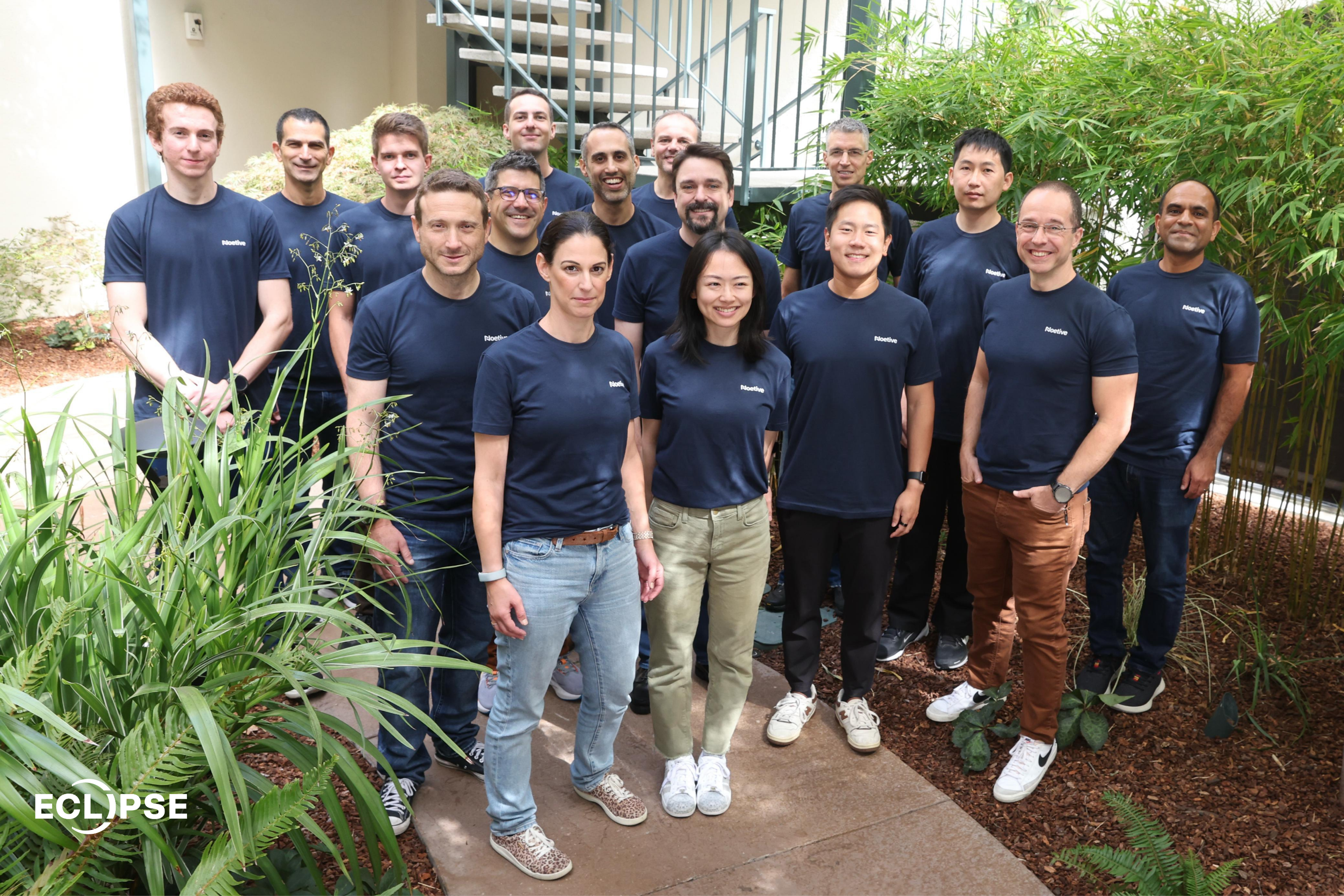
Building this takes a specific type of team. Noetive brings together AI researchers and engineers who built AI, machine learning and perception systems at Meta, Google, and Amazon, and operators who ran plants for Fortune 500 companies. These are the people who’ve lived on both sides of the problem that Noetive is built to solve.
When Amir joined Eclipse earlier this year after nearly a decade at Meta, he wrote that he saw a chance to work on the edge of the next tech transition. Previous industrial revolutions “automated muscle,” but this one allows intelligence itself to be deployed at scale, and that’s most consequential in physical industries — the exact terrain the Eclipse team spent our careers in: First as operators working inside complex physical businesses ourselves (where we were stuck with old-school software like ERP, MES, WMS, TMS, and dozens of other fragmented systems), and then for the past 11 years as investors in the next generation of builders transforming critical sectors. We’ve been focused on the role of AI in physical industries since our inception, but the launch of ChatGPT immediately got us thinking about what a similarly transformative intelligence layer could look like in the real world — not just another piece of software, but a fundamentally new way of running physical operations.
Amir saw the chance to build the next company from inside that experience. Together, our exploration led to Noetive.
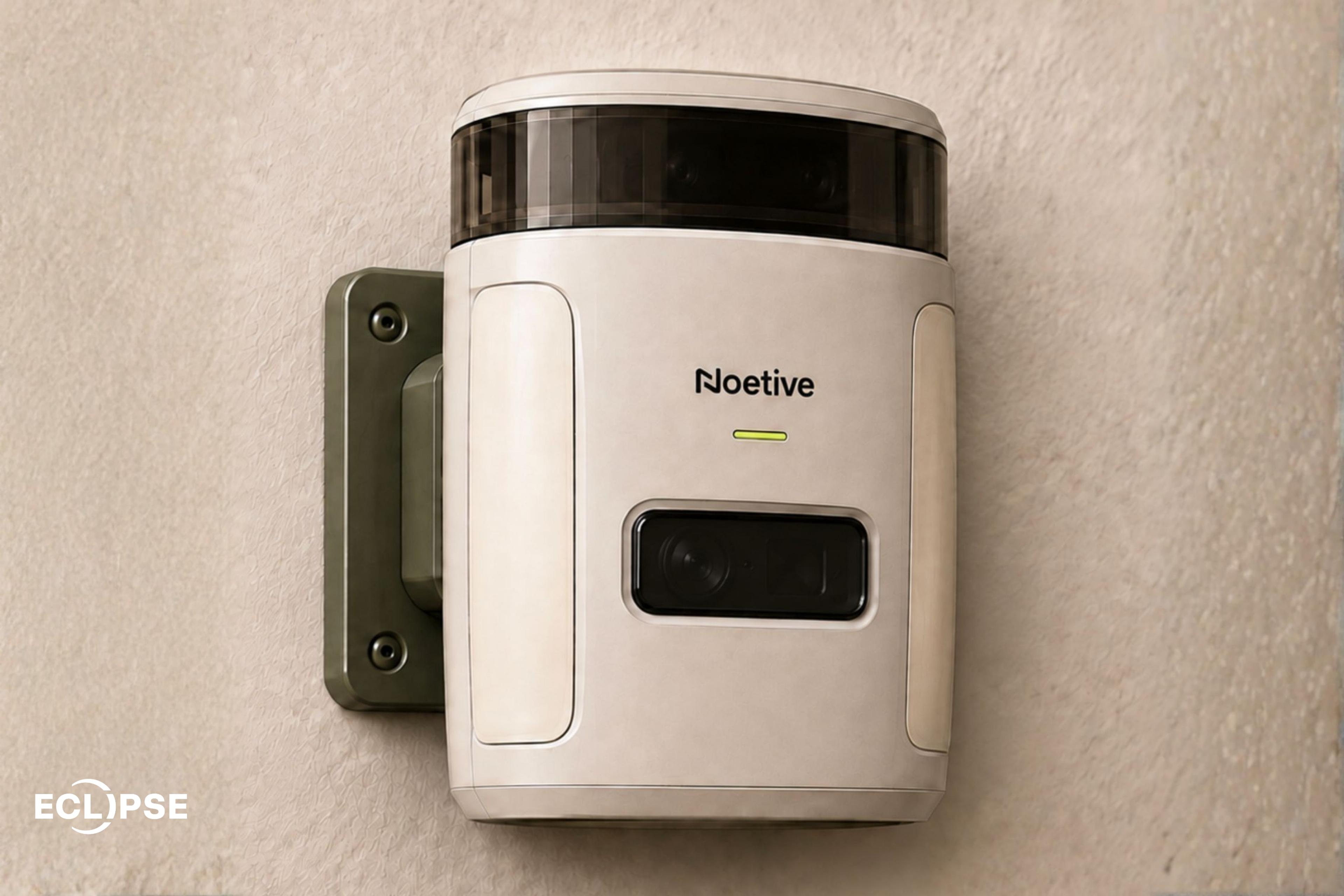
Where other tools flag a problem to a human and step back, Noetive behaves more like a full self-driving (FSD) car: An always-on AI brain, fed by an organization’s existing data streams and Noetive’s multi-modal sensing pods, orchestrating intelligence and action across every operator — digital, robotic, or human.
That brain doesn’t stay static. Fusing sensor data with what a business already collects, it builds an increasingly accurate model of how the operation actually works: Constraints, bottlenecks, the cause and effect of specific actions. Over time, that model becomes the business’s digital twin, letting Noetive work towards actual business objectives instead of executing static, siloed workflows. When conditions change (as they always do), it can evaluate what happened, plan, act, and adapt, continuously getting smarter as it works.

Building in Reality, Not in a Lab
Building a living digital twin for industrial operations can’t be done in a lab. Physical industries are messy and dynamic, full of exceptions no one can predict and outcomes with consequences that matter far more than an underperforming model. Unlike software-only AI labs that can iterate behind closed doors for years, a physical economy AI lab has to survive contact with the environment it’s being built for from day one.
Bedrock Robotics and Mytra, which were also built in partnership with Eclipse, took the same approach to their physical AI businesses. Bedrock developed its autonomy stack for heavy machinery while it worked closely with construction companies from day one, while Mytra was embedded with major grocery chains as it built its AI-powered robotic system to manage material flow in warehouses, because the edge cases that matter only show up under real throughput.
Noetive is operating the same way. The company is deliberately building its foundational capabilities — self-improving agents, specialized models, real-time representations of physical environments, and more — alongside real deployments operating today, and is currently working with strategic design partners across food manufacturing, and logistics to prove out the value and applicability of the technology.
Finding the Entry Points
As former operators, we know you can’t become the central nervous system of an industrial business with a top-down approach. Choosing where to start is one of the most consequential decisions a category-creating company like Noetive makes.
With our design partners, we spent months figuring out the wedge that checked four boxes: A pain point customers wanted solved now, one that would repeat across other customers, one with economic impact large enough to measure, and one that could teach the Noetive system something fundamental about how the business runs, because whatever came next would build on that foundation.
Together, we landed on dynamic production planning and manifest consolidation as the initial targets for the Noetive system. In both cases, we are able to dramatically collapse overall project timelines and transform the nature of the organizations’ response from reactive to adaptive. Planning went from being something that happened within a defined time period (and which could take hours, days, or even weeks) into a process that takes minutes and provides real-time, dynamic information that allows companies to adapt to new orders and other changing conditions. Meanwhile, solving for these two problems first enabled Noetive to expand into adjacent tasks: Whatever the system learns in one environment, it carries on as a reusable capability into the next.
The strategy is to solve real problems first, identify what repeats, and let the platform emerge from reality rather than theory. Internally, Noetive describes that progression as, “Solve, productize, platformize.”
The Vision
What Noetive is building toward is bigger than any single deployment. A wave of robotics and automation is beginning to hit physical industries. We’re seeing it on factory floors, job sites, warehouses, data centers, and power plants. But machines alone can’t run a business. They have to coordinate with people, materials, and everything else in motion. Today, that judgment is dispersed across a few experienced operators, machines that don’t talk to one another, and uncaptured knowledge sitting in paper logs, spreadsheets, and side conversations that never make it into any system.
Noetive’s vision is that intelligence itself can be deployed at the scale of an entire operation so every organization can run with the best operators’ decision-making everywhere all the time. If we achieve this, operational judgment won’t depend on whoever is the best person in the room that day. It will make businesses run smarter today, and turn the coming wave of physical automation into something that adds up to more than the sum of its machines.
Read more on today’s news from The Wall Street Journal.
Follow Eclipse on LinkedIn or sign up for Eclipse’s Newsletter for the latest on rebuilding essential industries.