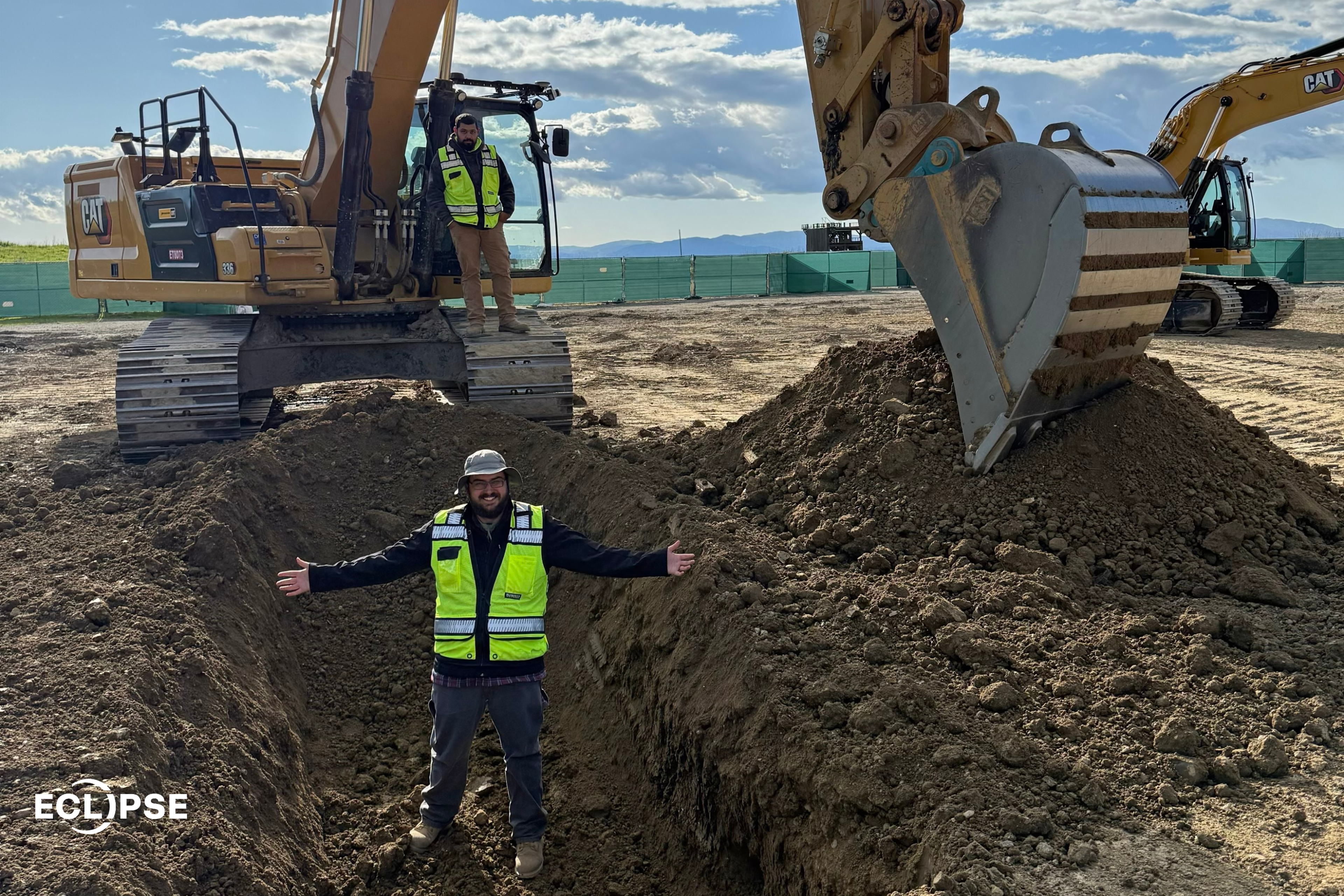
Bedrock Robotics didn’t start out to reinvent construction. It started with a deeper question: Where does autonomy go next?
Co-Founders Boris Sofman and Kevin Peterson had already answered a version of that question throughout their careers. At Waymo, for example, they helped bring self-driving systems from research to real-world deployment, proving that machine learning-driven autonomy could operate safely in complex, dynamic environments. That success raised a new question: If autonomy could operate reliably on city streets — while expanding access and creating time and cost efficiencies — where else could it unlock meaningful value?
They set out to apply autonomy to one of the core bottlenecks to industrial progress: A lack of available workforce to build and modernize the infrastructure underpinning essential physical industries. With historic labor shortages across agriculture, construction, mining, and other sectors reliant on skilled operators, the question wasn’t whether these sectors needed modernization — but where to apply it first.
Experienced technologists at this inflection point are exactly who Eclipse Venture Equity (VE) was designed for. VE specializes in co-building with exceptional founders at the earliest stages, often before a company is even formed. Long before Bedrock was incorporated, Eclipse partners Aidan Madigan-Curtis and Ryan Gibson spent months with Boris and Kevin identifying the right problem, shaping the go-to-market, and accelerating execution. Their connection came through prior relationships and active collaboration (Kevin had previously worked with Eclipse Partner Seth Winterroth, while Boris connected with Aidan as he began exploring what to build next).
Informed by years of experience across physical industries and scaling operations at companies such as Apple and Samsara, Aidan brought a broad industrial perspective and deep knowledge of labor, supply chain, regulatory hurdles, and macroeconomic trends. Ryan’s experience as a founder of a construction tech company gave him a strong understanding of building modern tech for massive markets with critical labor shortages and cost structures impacted by autonomy.
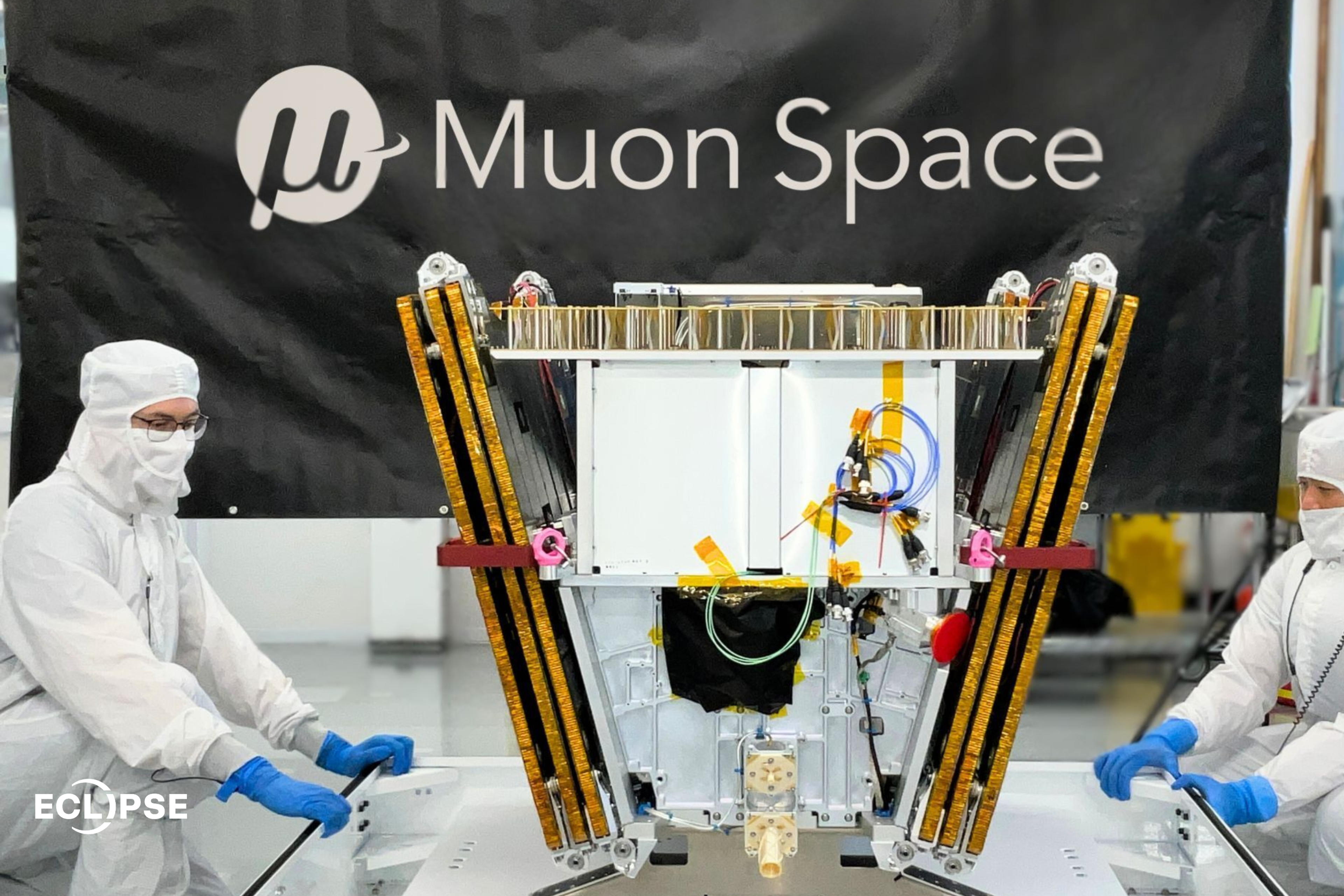
What followed was not a typical pitch process, but a months-long exploration that evolved into a partnership between Eclipse, Boris, Kevin, and co-founders Tom Eliaz and Ajay Gummalla. Together, they formed Bedrock in 2024 to develop autonomous systems for heavy machinery, starting with construction.
Since its inception, Bedrock has moved with unusual speed. They had a prototype within six months and were testing on customer project sites by the time they emerged from stealth in 2025. Today, dozens of machines are outfitted with the Bedrock system on active construction sites across the United States, a figure that includes numerous supervised autonomy deployments in the southern U.S. The company has raised more than $350 million in total funding, including a $270 million round in February 2026 that valued the business at approximately $1.75 billion.
That velocity was the result of tight alignment across several dimensions: Founders with exceptional expertise across physical AI; a massive market defined by urgent need and customers who worked hand-in-hand with the team from the outset; and early partnership with operationally experienced investors who accelerated execution. Together, these forces created a flywheel that moved quickly from idea to deployment and is now approaching industrial scale.
Here’s a breakdown of how they did it.

From their previous experience, Boris, Kevin, Aidan, and Ryan knew how critical it was to pick the right initial market and buyer. Together, they down-selected Bedrock’s equivalent of Amazon’s book business, carefully evaluating:
The team landed on construction for several reasons. Transformation of the $1.8 trillion U.S. construction industry is imperative. The industry faces a 500,000 worker deficit projected to worsen as more than 40% of the construction workforce retires over the coming decades, with few young entrants. Training is expensive and time-consuming, and other labor sources are facing disruption. At the same time, the U.S. needs to build roughly 1.6M in new residential housing units per year to meet demand, and about $1 trillion dollars worth of data center/AI infrastructure to stay competitive.
“Construction is one of the lifebloods of this country, and the demand is increasing every day as we reindustrialize. But labor is just not there,” says Boris. “Autonomy is the answer that not only allows us to keep up with existing demands, but to fuel the growth that is necessary for our country to thrive.”

Once Bedrock’s direction was clear, execution required operating in the real, complex world as quickly as possible. Frontier technology couldn’t be built in isolation.
From day zero, Bedrock worked directly with customers. The team spent months in the field with operators, shaping the product around real-world constraints. This tight feedback loop enabled a rapid transition from whiteboard to prototype within six months, followed by deployment testing on customer project sites a year later — while building trust along the way.
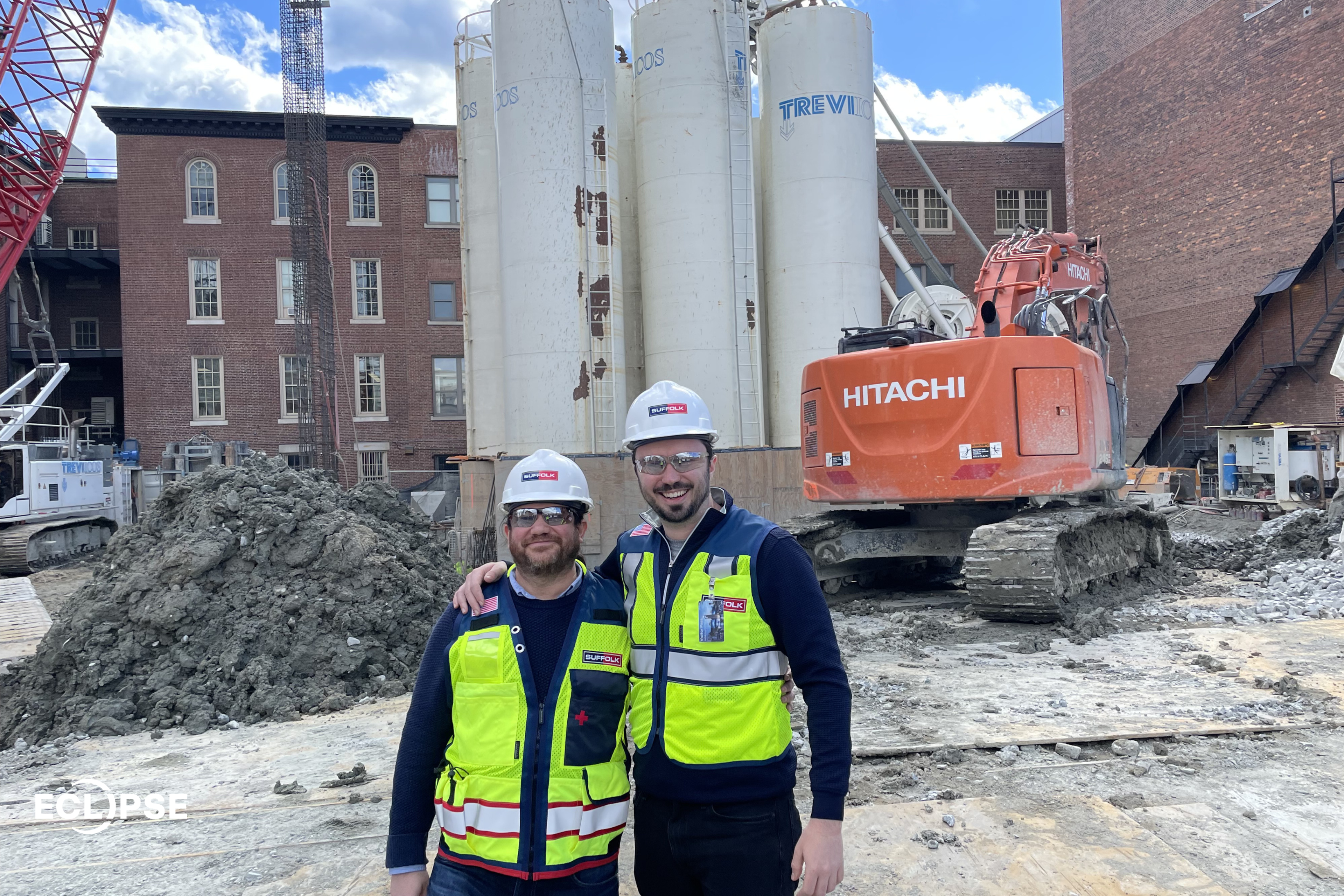
Ryan’s background as a construction-tech founder was especially valuable at this stage. With deep industry knowledge and a strong network of project managers, innovation teams, developers, and builders, he helped open doors across the ecosystem. Alongside Aidan and the founders, the team spent time on dozens of job sites, speaking with everyone from laborers and machine operators to foremen and company owners. These conversations surfaced key insights into project variability, labor shortages, and the economic impact of autonomy: Compressing schedules while improving reliability and safety could enable projects to finish on time, within budget, and become faster and cheaper over time.

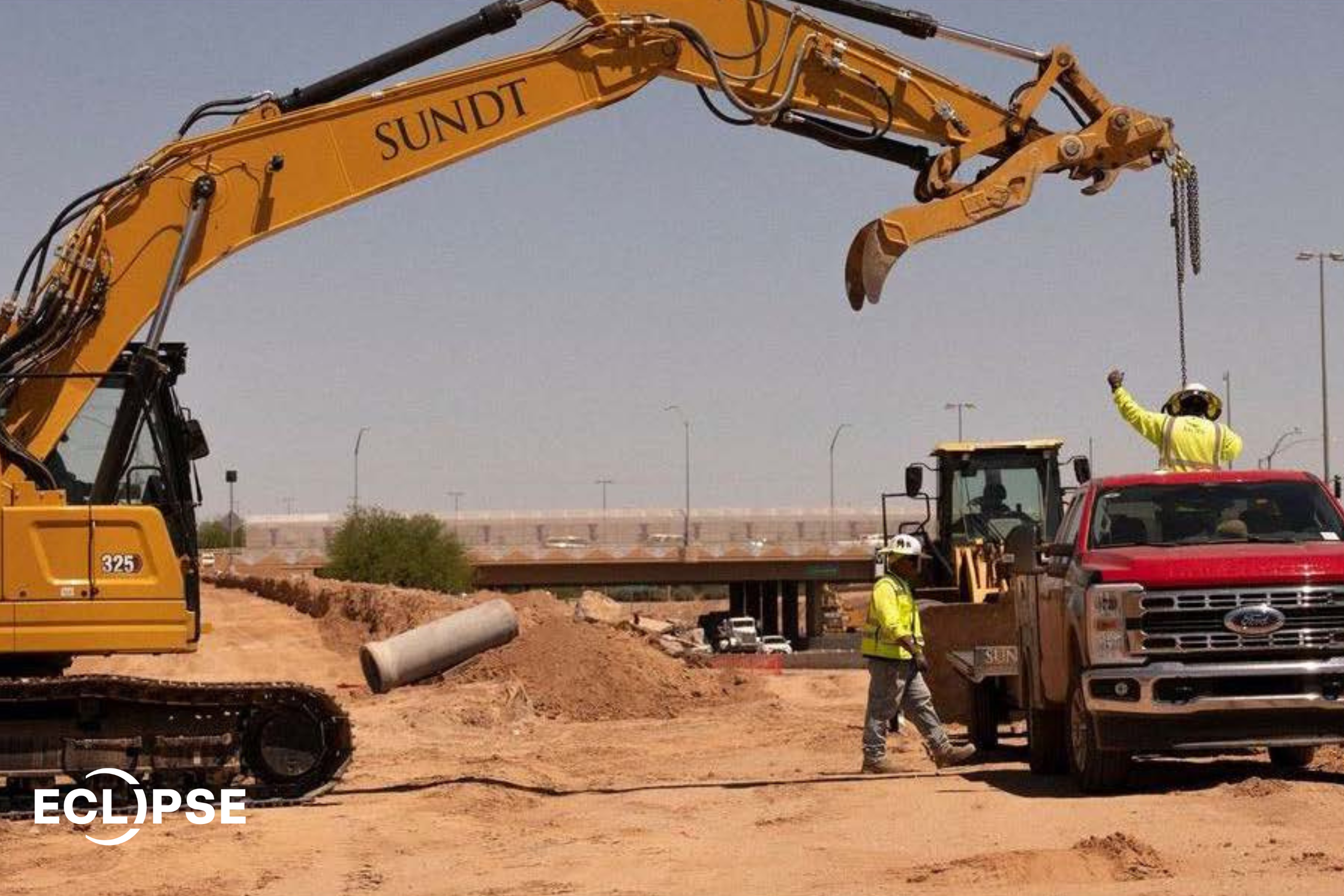
The industry’s eagerness to collaborate reflects both Bedrock’s approach and the growing receptiveness to physical AI. Despite clear need, construction has historically been overlooked by technologists. When Bedrock emerged, the industry was ready to engage, and the company has worked closely with organizations across the country like Sundt Construction, Zachry Construction, and Champion Site Prep.
“Over the past hundred years, most sectors of the economy have increased productivity dramatically, but construction has not,” says Kevin, who also worked as an autonomy architect at machinery manufacturer Caterpillar. “Bringing in autonomy gives us the ability to not only get much more done, but to actually improve safety and precision because you effectively have more ‘workers’ on the ground.”
Working closely with the industry allowed Bedrock to analytically map scopes of work, project types, machine utilization, and cost structures to identify the starting point for autonomy: The excavator.
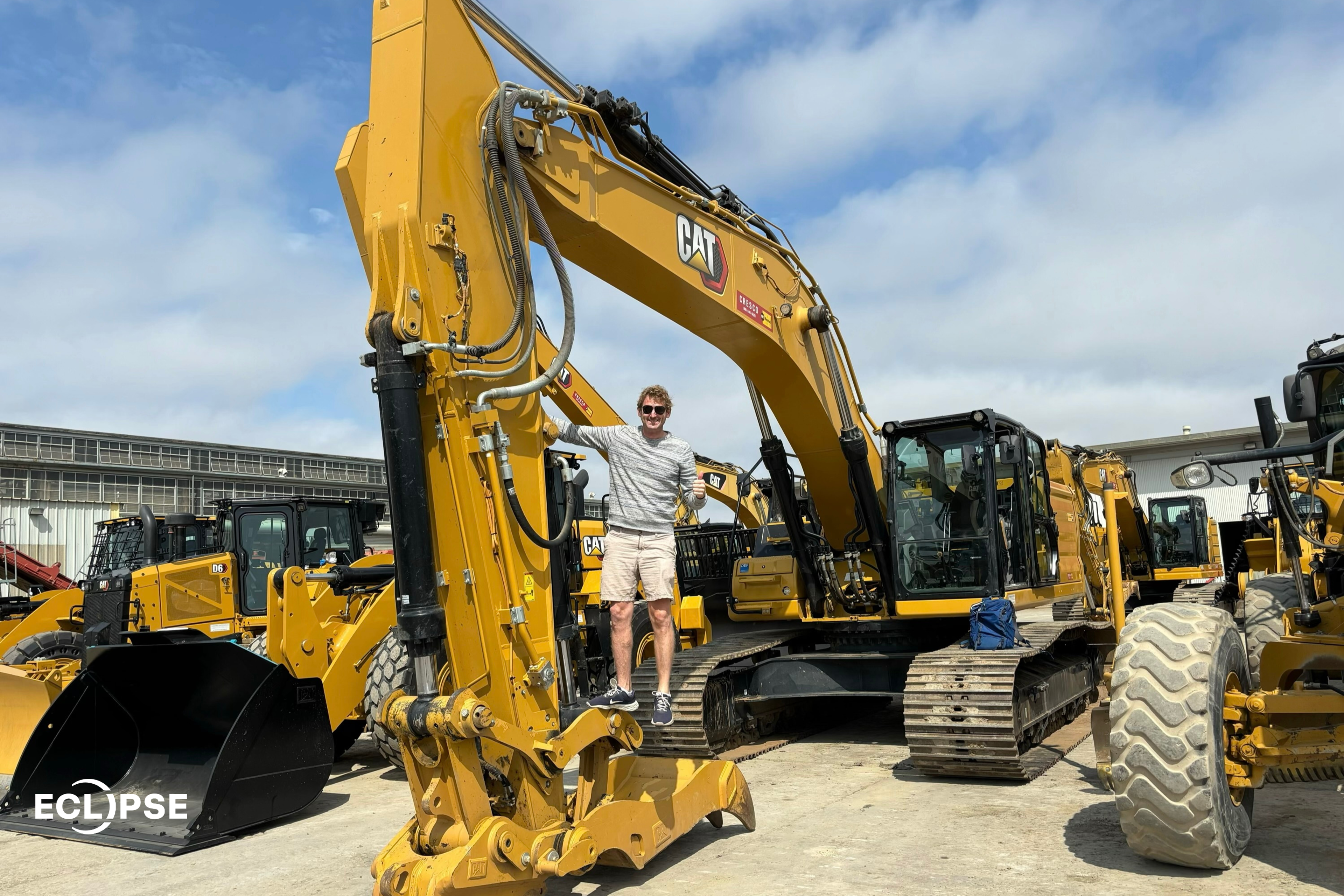
As one of the most versatile, widely used, and complex machines, excavators typically make up about 25% percent of machine fleets. With three actuators (boom, stick, and bucket), eight axes of movement, and tasks ranging from earthwork, demolition, and material handling, they are an essential machine that accounts for a significant portion of operators’ working hours on job sites.
They are also one of the hardest machines to learn, both for humans and for autonomous technology.
Bedrock started there for a few reasons: Mastery of higher complexity use cases (in both workflow and degrees of freedom) like an excavator generalizes well to simpler machines — a lesson learned from the team’s autonomous driving experience. This put Bedrock on an accelerated path to broadening future use cases and machine support.
“Over the course of our careers, one of the key lessons we learned is to tackle the hardest problem first, because once you tackle that hard problem, then most of the other things will just fall into place," says Ajay, who runs hardware at Bedrock. “And excavators are really hard.”


An excavator equipped with an autonomy stack must interpret dust clouds, rebar, and trench walls while coordinating hydraulic movement with centimeter precision — and in dynamic environments where GPS is unreliable and payloads are dangerous if mishandled. The required sensor fusion, control theory, and real-time planning demands far exceed most robotics projects. But the upside of solving this complex engineering problem is huge: Excavators capable of 24/7 operation, job sites with fewer injuries, and throughput gains that can compress multi-year projects into single seasons. Starting with the excavator meant Bedrock was optimizing for the highest pull from the industry.
“The construction industry is facing unprecedented challenges, and Bedrock is bringing them the capabilities to actually face all these challenges and build the society of tomorrow,” says Laurent Hautenfeille, who previously worked with Boris at Uber Freight and was so drawn to the Bedrock’s mission that he joined as the company’s Chief Operating Officer in early 2025.
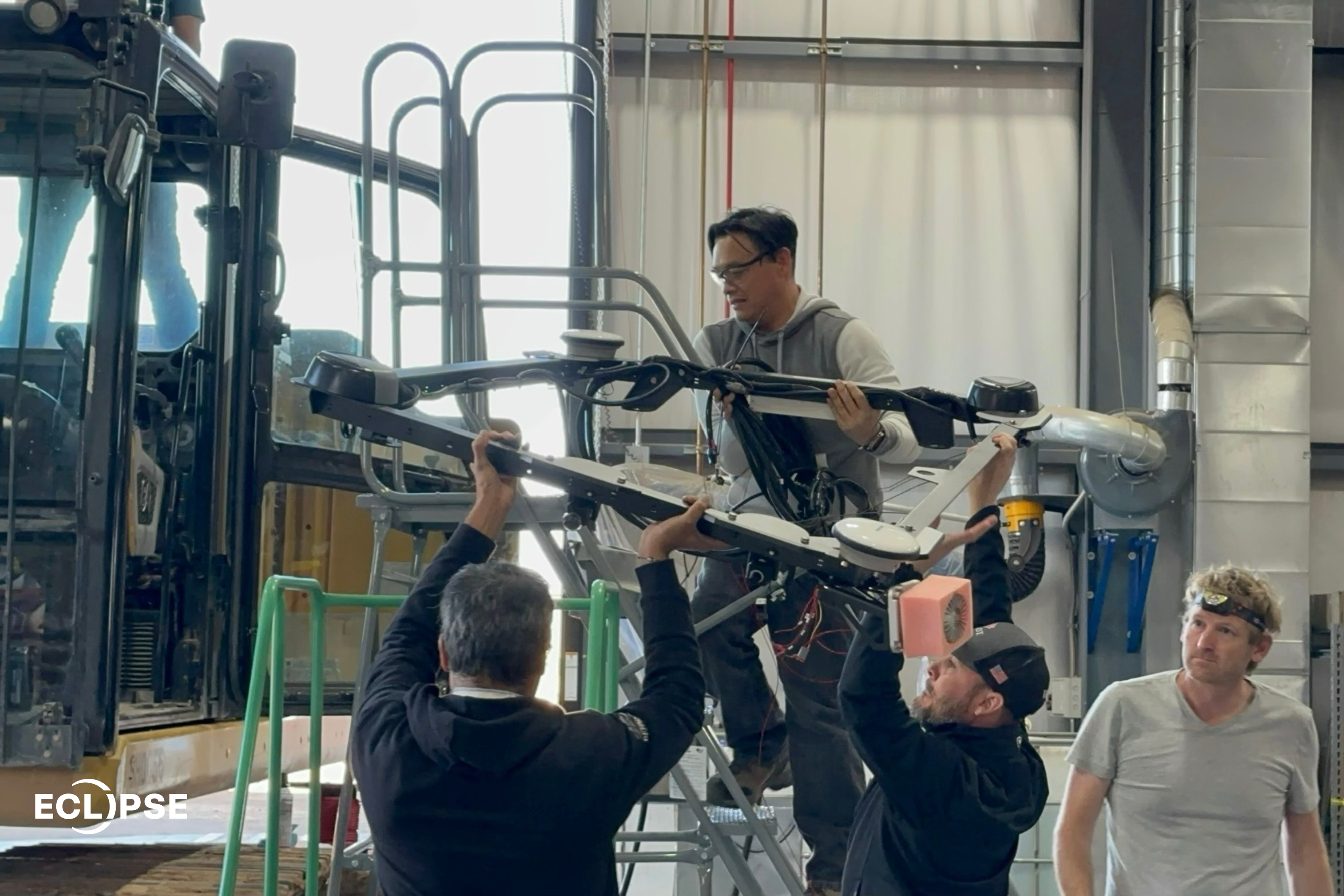
Bedrock’s pragmatic approach to adoption has been a major factor in its success. Rather than requiring new equipment, the platform integrates with existing fleets. It is generalizable, retrofit-first, sensor-agnostic, and deployable across the $100B+ installed base of machines already in use. This strategy is possible today because of the team’s hard-won learnings from their days at Waymo, Uber Freight, Anki, and others, plus the maturity of the machine learning and hardware ecosystem today. Additionally, the company has benefited from Eclipse’s broader network of talent, customers, regulators, and providers of tooling such as robotics development platform Foxglove.
“We used to have to reinvent everything, from the hardware to the tools to the labeling systems, and all that infrastructure requires a lot of money, time, and people,” says Boris. “When you don’t need that, it shortcuts everything you need to bring out a product dramatically, which brings into focus applications that would’ve been previously infeasible.”
These efficiencies have enabled Bedrock to deploy its technology on dozens of machines nationwide. Recently, the company reached a milestone as crews operated five autonomous excavators and five autonomous dump trucks together in coordinated testing.
“Autonomy isn't just about making one machine move on its own. The real challenge is orchestrating multiple machines across different tasks, all on one site,” the company said in a LinkedIn post.
By the end of the year, Bedrock plans to have their first operator-less deployments on customer sites.
Bedrock isn’t just a robotics company, but a new model for how physical work gets done. Autonomy is becoming a core layer of industrial infrastructure.
Technology that augments and extends the work of skilled humans is critical to reshoring industries like manufacturing, mining, and supply chain logistics. This means building autonomous machines that can operate alongside people and continue progress beyond human labor constraints.
“We need to be able to be productive around the clock,” says Kevin. “At Bedrock, I think we're starting the fire on this incredible transition towards autonomy that we're going to see majorly impact our industrial base over the next 50 years.”
Follow Eclipse on LinkedIn or sign up for Eclipse’s Newsletter for the latest on rebuilding essential industries.