Wayve’s contrarian approach made it an AV outlier— and put it on track to become the go-to provider of commercial-scale tech to enable any car anywhere to drive itself
Every day, around the world, human beings not yet old enough to have a fully developed brain get behind the wheel of a car and drive for the very first time.
Supervised by an adult yet armed with little more than a day’s worth of in-class instruction on the laws and rules of the road, teenagers are deemed capable of learning to operate vehicles that can weigh thousands of pounds and travel 80 miles per hour.
At face value, this sounds crazy. But it’s been the accepted learning method for more than a century for purely rational reasons: People already know most of what they need to know about driving long before they ever try to do it. It’s not a deep knowledge of automotive mechanics or the memorization of perfectly mapped-out routes that allows us to learn, but our inherent understanding of the physical world, gained through our lived experience. This acts as a foundation model of the world that we continually upgrade as we learn specialized tasks (like driving) by just doing it.
Proof: Since the advent of passenger vehicles, billions of literal children have become skilled drivers in a relatively short amount of time. The “world model” of learning scales.
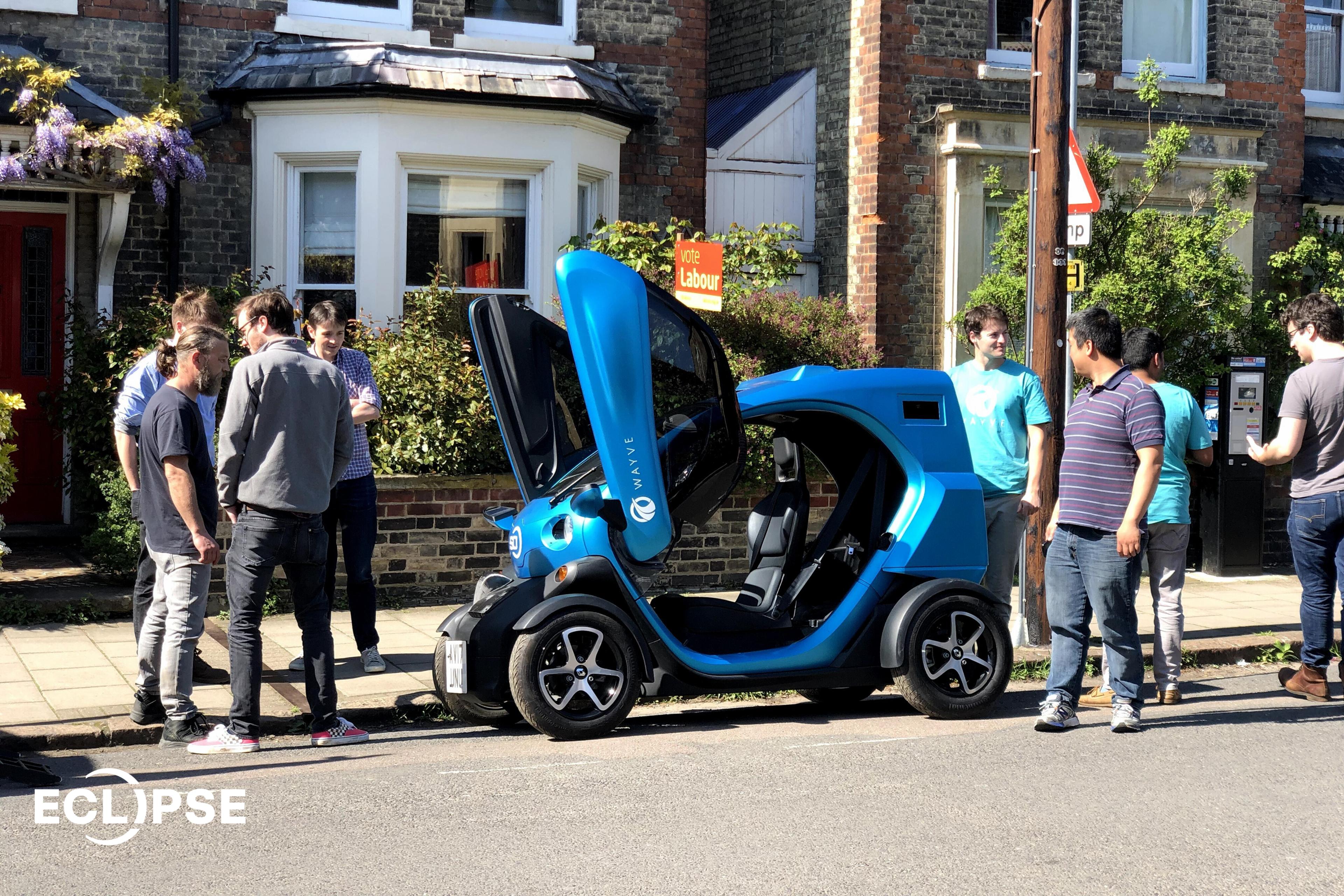
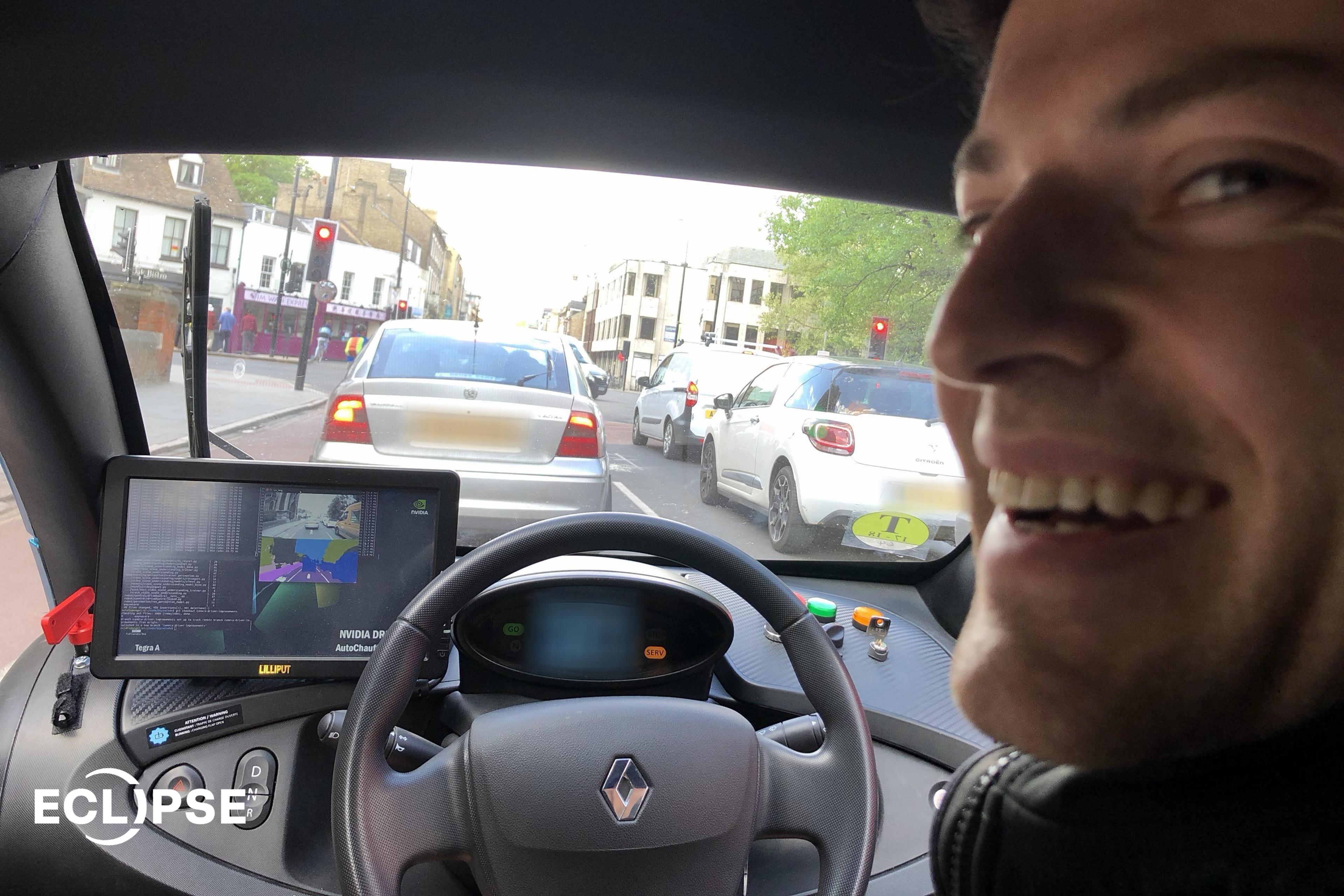
This is what I kept reminding myself in 2019 as I gripped the dashboard of the tiny 2-seater Renault Twizzy tearing down a narrow road in Cambridge while its driver — an AI “brain” equipped with a data-based understanding of the physical world — figured things out on the fly. It was my first test ride with Wayve, a startup taking a completely different approach to autonomous driving at a time when others were outfitting vehicles with multi-sensor stacks and giant instruction sets in the form of high-definition maps and hand-coded modules. AI-native Wayve, meanwhile, utilized end-to-end deep learning and cameras to effectively teach an AI system how to think and make decisions in any environment — just like a person learning how to drive would.
I was immediately struck by the straightforward brilliance of this approach when I had met Wayve CEO and Co-Founder Alex Kendall about a year prior. I’ve spent my career building and investing in autonomous technology — first as an operator deploying robotics at GE, and as a partner at Eclipse since its inception in 2015. I believe embodied AI is the opportunity of our generation, and while I was thrilled at the progress in the AV1.0 field, I felt the approach was fundamentally flawed — and there was evidence everywhere: Startups and large public companies alike were spending billions to develop and test driverless technology, but were nowhere near building a scalable AV business. While the growing availability of Tesla Autopilot and the rise of robotaxis and other AV testing fleets led to 2018 being declared as a “breakthrough” year for AV, the sector was hit with a series of setbacks in 2019. Crashes, regulatory hurdles, and myriad unsolved technical challenges had prompted many investors, ride-hailing operators, and OEMs to pump the brakes.
But Wayve was different. Building on Alex’s PhD work at Cambridge, the team designed AI-native architecture comprising a reinforcement learned algorithm, camera only computer vision, and some helpful nudges from the human supervisor — and they taught the system how to drive in a day. With each trip on the road, it got better, and within months it was being tested on urban roads it had never seen before. It may have been an awkward time from an investment perspective, but nobody — not even the most pessimistic AV experts — could convincingly give a reason why the actual architecture wouldn’t work. In late 2019, Eclipse led the company’s Series A with deep conviction that Alex and team were onto something.
It was a powerful demonstration — even if I couldn’t help but feel like a nervous parent watching their kid learn to drive as I rode in Wayve’s jerry-rigged prototype. The car had a laptop duct-taped to the roof and was so small that there was barely room for me, Alex, and the laptop that was navigating via Wayve’s model. Meanwhile, Alex was like the seasoned driver’s ed instructor, calmly taking control of the wheel or hitting the brakes whenever his student needed correcting. As janky as the technology may have looked at the time, it worked. On each subsequent trip, running on an updated model trained with the correction data, the car improved. I became more and more convinced that this really was the best way for the “student” to learn. This was the way it would figure out how to drive anywhere, just like people do.
That student learned at an astonishing rate. Seven years later, Wayve has evolved from a highly contrarian, fledgling team of 20 people working in a dingy U.K. garage into a world-class business developing physical AI at an industrial scale: By 2027, people will be able to buy cars that they don’t have to drive themselves, because any vehicle can become self-driving using Wayve’s off-the-shelf technology. Fueled by a fresh $1.5 billion in new funding, Wayve is embarking on expansion efforts that build off its already extraordinary momentum of the past 18 months: The company opened offices in the U.S., Germany, Japan and Israel, drove in more than 500 cities around the world, teamed up with Uber to launch robotaxi trials in 10+- cities starting in London and Tokyo, deepened its collaboration with Microsoft ,Nvidia and Qualcomm, and is aligned with three of the world’s top 10 OEMs: Nissan has signed a production deal to integrate Wayve’s technology into a broad range of vehicles, and Mercedes-Benz and Stellantis are strategic investors.
While hailing a robotaxi has been the way most people have interacted with driverless technology up until now, commercially available automated driving — in any car, capable of driving anywhere — can be exponentially more impactful, says Alex.
“There are 90 million new cars sold every year,” says Alex. “I think that's going to be the first large-scale experience that people get with embodied AI, where they own a system that can give them time back and improve their safety, while expanding access to the physical work of driving a car.”
Wayve is poised to become one of the first embodied AI companies to commercialize its technology not just because they took a contrarian approach to AV, but because of the way the company built a new category while integrating into the existing automotive market.
As I wrote a few years ago, any company working to create a new category must hit critical milestones across every one of those areas throughout the various stages of commercial growth — graduating from proof of concept, to proof of demonstration, to proof of value. I met Wayve when the company was in its proof of concept phase, a critical juncture for startups creating first-of-its-kind technology (as any company in the Eclipse portfolio can attest). This is an exciting time when ideas become something you can physically touch — and it’s a phase many startups never make it out of.
Today, there are countless robotics startups that can build physical AI products that blow people’s minds during demos, but only a small number are even remotely close to deploying their tech at an industrial scale. While emerging technology faces commercialization barriers from unsolved technical challenges to capital and talent constraints, the biggest reason for the so-called physical AI deployment gap is also the simplest: Many founders and investors have never scaled a hardware business, AI-powered or otherwise, in a physical industry.
Wayve easily could have fallen into this trap, especially as first-time founders building off academic research. While they knew that building a startup was the best (and fastest) way to solve the problems to make AV2.0 a reality, it wasn’t always clear how they would turn it into a viable business. This challenge was compounded by the fact that the automotive industry writ large wasn’t exactly leaping at the chance to work with AV startups.
“Throughout the life of Wayve, we had many different strategies but we had to pivot and chop and change until we got to the point where we found something that is now really resonating,” says Alex. “But when we first started trying to go through the automotive industry, we couldn't even get a conversation with OEMs. We were just dismissed and thrown away as something that was black box unsafe, not going to work, and not seen as credible or capitalized in the way that the OEMs could trust.”
The onus was on Wayve to build that trust, which required much more than the proof of concept demonstrations that got early believers like Eclipse and other investors on board.
In the months after raising their Series A, Wayve ramped up trials in London while significantly improving their model training via collaboration with Microsoft Azure. This achieved a few goals: The cloud partnership enabled them to handle the massive data sets being collected, allowed them to scale up training, and driving in one of the world’s most congested cities with a complex, ancient layout provided a rich training ground for the model to learn how to solve the hardest problems in driving from the outset.
“If you are a deep tech company and you tackle the easier problems first, then you're always at risk of failing when the hard problems hold you back in the future,” says Alex. “But if you go straight for the hard problems when you are still early, you can quickly figure out where you can forgo some costs and move on to new things in order to stay at the frontier of what's possible.”
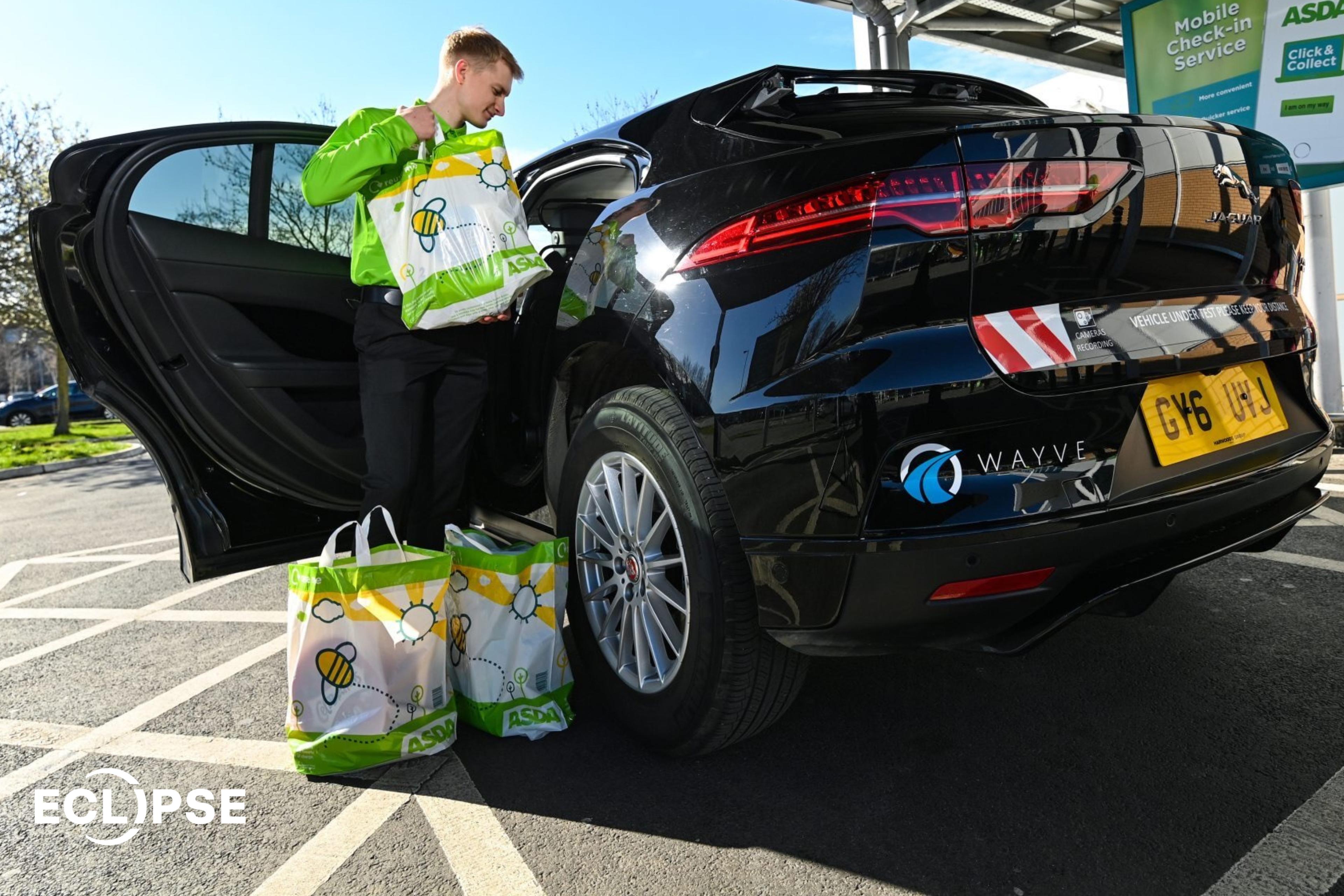
Around this time, Covid struck. Suddenly, demand surged for home delivery of groceries and everything else. This opened up a unique opportunity for Wayve, which formed a handful of partnerships with U.K-based grocers Asda, Ocado, and parcel delivery company DPD. These trials provided valuable data to improve Wayve’s model, while establishing credible (and growing) customer demand for autonomous technology.

Armed with the data from the trials and rapidly improving performance, Wayve raised a $200M Series B in 2022, led by Eclipse. This enabled the company to scale up operations, grow the team, and develop and release GAIA-1, the first generative world model for autonomous driving (an undertaking that Wayve has been working on since 2018). It was becoming increasingly clear to the field that AV2.0 was the right pathway to build a scalable driving intelligence.Yet, as important as the partnerships with the delivery companies were for training the models and generating excitement over AV2.0, it was becoming clear that it didn’t create a path for Wayve to quickly grow at a level that would allow the technology to go global.
“Delivery and fleet companies were booming in profits, so we started to see an opportunity to go to market through last mile delivery — which we thought could be a more efficient and effective path to go. But we couldn’t grow from there,” says Alex. “The challenge wasn’t in expanding trials, but in figuring out how we could manufacture and integrate at scale. We realized it was impossible to escape the OEM space.”
The timing was right to try again, because the mood had shifted. The AI frenzy was in full force following the late 2022 launch of ChatGPT, which led to an explosion of excitement and activity for all things digital AI-related practically overnight. While physical AI didn’t have a similar ChatGPT-like moment, the enthusiasm from digital AI carried over and amplified the waves of compounding progress that had gradually made physical AI technology visible, understandable, and attractive to investors and OEMs. More VC-backed robotics startups entered the frey, major tech companies declared physical AI the next major focus area, and mature robotics companies hit significant milestones. In 2023, AV1.0 leader Waymo, which just a few years prior had been progressing slowly, was operating fully driverless taxi services in three cities.
The market was ready for robotics, and understood the power of large foundation models to drive the next wave of AV advancement. All of this, on top of Wayve’s dramatically improved performance and the release of its GAIA-1 model, helped the company land its $1.05B Series C in 2024 (notably led by SoftBank with strategics including Nvidia and Microsoft). It was time for Wayve to lean into the tailwinds — and aggressively ramp up positioning as the face of AV2.0.
“We really shifted the company, materially, to have the DNA of embodied AI across all functions,” says Alex. “The messaging, the product articulation, the engineering talent was all focused on really commercializing and developing a reliable product. From a safety standard understanding, we really positioned the company to go do that, and that has yielded dividends for this organization.”
Over the next year and a half, Wayve opened offices in and testing locations in the U.S., Germany and Japan, announced a partnership with Uber to offer robotaxi services in London, and embarked on a global testing campaign by driving zero-shot in over 500 cities across Europe, Asia, and North America. In late 2025, Wayve signed definitive agreements with Nissan, which led to the $1.5B Series D round in early 2026.
“The market had entirely shifted from end-to-end learning being contrarian to now being something people were curious about, and today it's now the consensus approach towards this problem,” says Alex. “This is alongside the rise of EVs and software-defined vehicles which have GPUs and sensors that make it possible to bring a product like what we're building to market without retrofitting.”
That U-turn from OEMs, Alex says, has opened up the market with the largest application of its technology. Ninety million cars are produced globally each year, and Wayve is positioned to license software into all of them, from hands-off to eyes-off to driverless systems.
“Now, if one of our OEM partners gives us a vehicle, within a month or two we can deploy the software and adapt it to them,” says Alex. “It’s an actual product that can be compliant with automotive expectations, work with their production infrastructure, and of course interface with all of the tools and processes they expect — and do so in a way that can be deployed worldwide without an HD map.”
In the not-too-distant future, it might actually be crazy to teach teenagers to drive, because it won’t be necessary.
In less than a decade, Wayve went from being a research project to a leader of the embodied AI movement. The AV sector is now converging on the implications of reliable, safe, performative and generalized autonomy, and progress is happening exponentially faster and faster.
Wayve represents the evolution of embodied AI as a whole, while also serving as a case study of the painstaking work it takes to build a generational business in a physical industry.
“I often get the question, what was the breakthrough or what led to this being possible? And it's really hard to pin down because the truth of it is it was 1% gains every day for 10 years that got us to where we are,” says Alex. “Those 10 years of hard work and iterative development put us in the position where we have the experience and the understanding of how to bring this technology to market in a safe way, and in a way that can actually not just unlock autonomy, but unlock it at scale.”