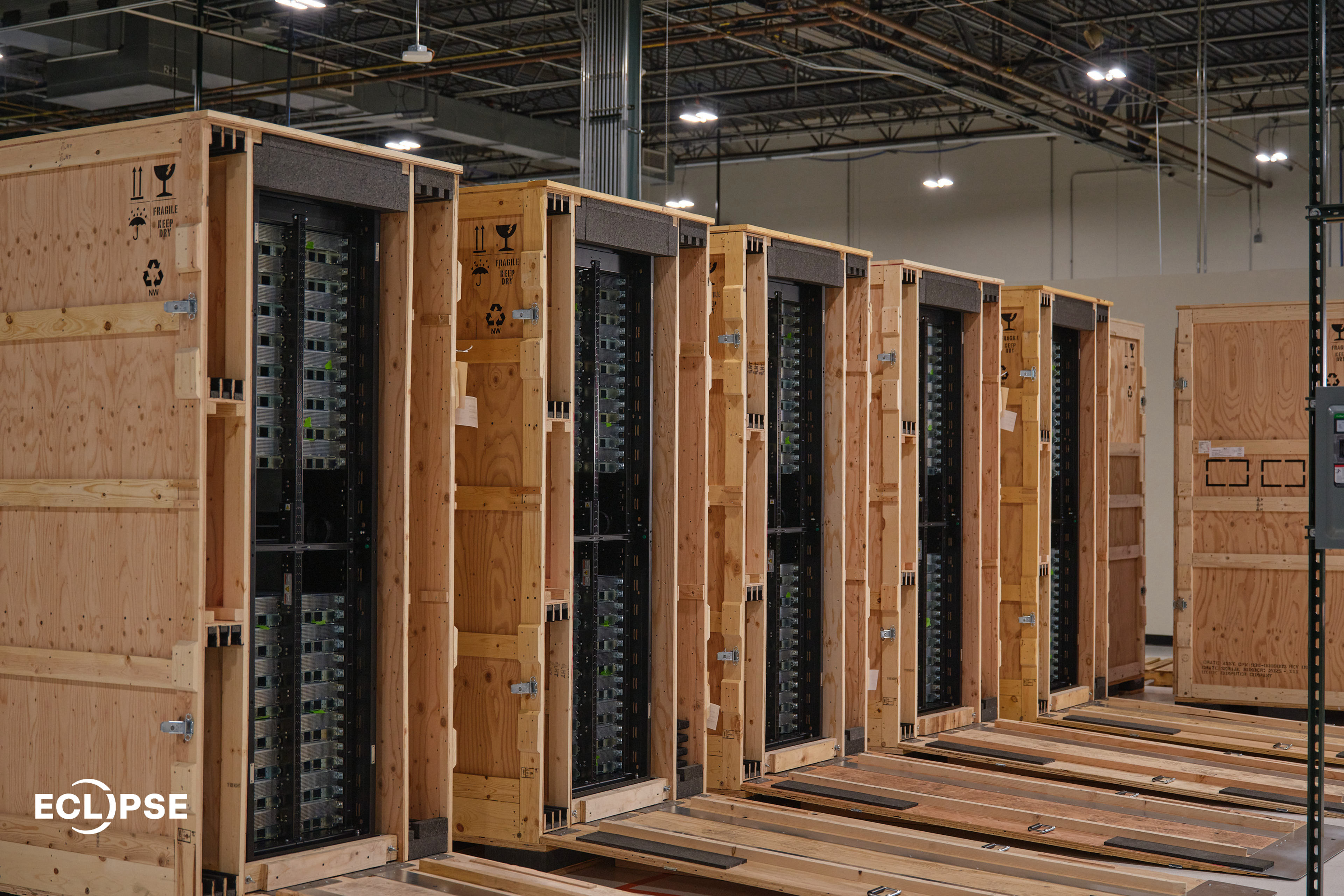
For decades, organizations have been left with only two choices, both requiring compromise: Rent the cloud and hand over control, or jerry-rig a stopgap from a half-dozen vendors. The right solution would require rebuilding the entire compute stack.
That was a mountain even the hyperscalers only climbed for themselves. Oxide climbed it for everyone else.
Today, the world’s most demanding organizations run critical workloads on Oxide’s rack-scale cloud computers. They have the capabilities of the public cloud, on infrastructure they own. They are the fastest-growing hardware/software systems company Eclipse has ever seen, and this spring they hit a milestone almost no startup ever reaches: They paid income tax. Most startups are not profitable, Oxide is and shows no signs of slowing down. Revenue grew nearly 80-fold between 2025 and 2026.
The timing couldn’t be better. The world does not have enough compute, and the organizations building with AI don’t want to pour their most valuable data into infrastructure someone else controls. They want everything the cloud can do, on machines that belong to them. That’s exactly what Oxide delivers, and why everyone wants to work with them.
But it wasn't always this way. For the first few years, few people even knew who Oxide was — and even fewer believed they could do what they said they would. While there are now new pools of capital dedicated to this exact space (raised by people claiming to have discovered it), it was a much quieter market when we first started working with Oxide in 2019.
Eclipse met Oxide right when they launched, when Bryan Cantrill, Steve Tuck, and the team set out to deliver a true cloud experience on infrastructure customers could own. Doing that meant building something no one else had tried to build as a single system, from hardware and firmware through networking and software. And then they had to manufacture the damn thing at scale.
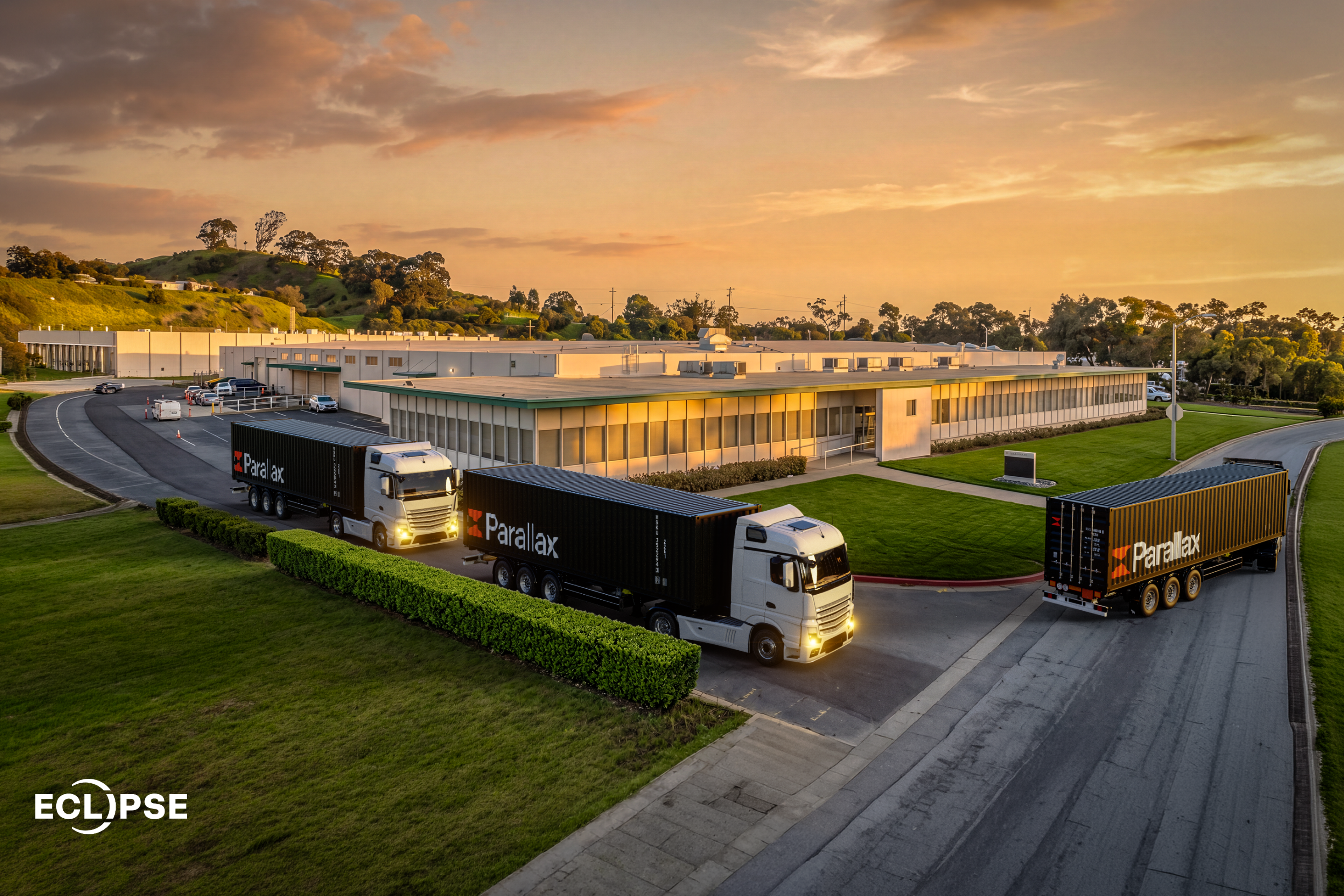
Plenty of people thought they were nuts for even trying. But Bryan and Steve didn’t let that derail them, and they certainly didn’t waste time trying to change anyone’s mind with a lot of bravado. They put their heads down and built, and in 2023 they shipped their first computer.

For seven years, Oxide has worked through deep technical problems, manufacturing challenges, supply-chain constraints, demanding customers, investors who pulled term sheets (talk about a huge mistake!) and the sheer operational complexity of taking a new computing architecture from an idea to production. There have been plenty of opportunities to make excuses, lower the bar, or decide that all the pressure justifies bad behavior or taking shortcuts. They never have.
And while Oxide has been heads-down building, the economics of compute have fundamentally changed. AI is putting enormous pressure on compute, memory, networking, power, and data center capacity, and companies are spending serious money to fuel one of the largest infrastructure buildouts in history: Between every server, storage array, and switch purchased by all types of companies (not just hyperscalers), worldwide spending on data center systems is set to hit $882 billion this year, marking a nearly 63% jump from 2025. And that doesn’t even capture the full figure — once you factor in the costs of associated infrastructure like power, cooling systems, and the buildings that house compute hardware, total data center capex will exceed $1T in 2026, on track to push past $3T by 2030.
As the AI revolution has unfolded, security, sovereignty, performance, and economics are increasingly dependent on ownership of infrastructure. As companies look to scale while developing more advanced products, having control over every part of the stack will become even more consequential.
Oxide spent seven years building for this exact environment, which is why everyone is clamoring to work with them (and why some of those investors who once wrote the company off are now trying to rewrite history and position themselves as the first to see this moment coming all along). Demand for Oxide’s product is outrunning everything the company can build. The backlog is large and growing, and in a hardware business scaling this fast, every new rack means real capital committed to components and manufacturing long before a customer takes delivery.
Oxide has reached a point where constraint is no longer whether customers want what they’ve built. It’s how fast they can build.
To help this incredible team meet this moment, Eclipse is proud to be leading Oxide’s $445 million Series D, with participation from existing investors USIT, Riot Ventures, and Jane Street, alongside new investors Atreides Management, AMD, and Micron.
For Eclipse, this growth investment is a continuation of the same conviction we’ve had in Oxide since we led their seed and Series A rounds. While some regard growth investing as a fundamentally different animal as early stage partnership, I don’t see it that way. At seed, you have to be able to recognize what founders can achieve before a lot of the evidence exists. The evidence may be everywhere once you get to the growth stage, but you still have to see the potential for a team to hit even higher levels and have the conviction to keep leaning in.
When Eclipse backed Oxide’s Series B, I wrote that venture capital was never supposed to be safe. It was meant to back wild adventures where the technical difficulty is real, the risk is guaranteed, and success is far from certain. Oxide has always been one of the purest examples of that idea for me.
Seven years watching Oxide has also shown me something else: There’s a persistent idea in Silicon Valley that building a great company requires being a “killer,” and that being a killer somehow requires being a jerk. I think that’s BS. The best founders are absolutely intense, obsessive, and almost unreasonable in their desire to win, and Steve and Bryan are as intense and demanding as any founders I know. But they aren’t performative and loud about it. They channel that intensity into working hard while having an incredibly high bar, and as a result they get more done, faster, and at a greater scale than anyone else.
Yes, you have to be a killer to build a great company. But Oxide is proof you don’t have to be a jerk. They’ve humbly evolved into one of the most important players of the biggest compute infrastructure buildout in history. I’ve been proud to be partnered with them ever since they launched with a risky idea and a ton of doubters, and today I’m even prouder that they’ve become the winners they are by doing it the right way.
More on today’s news from Forbes
Follow Eclipse on LinkedIn and sign up for our newsletter for the latest on rebuilding essential industries