Some people still file Redwood Materials under "battery recycling." That's like calling Amazon a bookstore.
Working at the Tesla Gigafactory in the mid-2010s, Redwood Founder and CEO JB Straubel saw a stark reality: Every single battery manufactured in North America came from materials mined overseas, and spent batteries were shipped right back as waste. The U.S. didn't actually have a mineral shortage, JB realized. It had an above-ground “mine” locked inside dead batteries and scrap, with no infrastructure to capture it. That gap became Redwood.
When Redwood was founded in 2017, battery recycling was just its first foothold on the path to owning the full life cycle of domestic energy management: The infrastructure and relationships to recover, refine, and remanufacture materials, and later, to provide powered land and energy storage.
Today, Redwood sits firmly in the center of the electric power ecosystem, and its ability to provide every core capability of energy infrastructure couldn’t come at a better time.
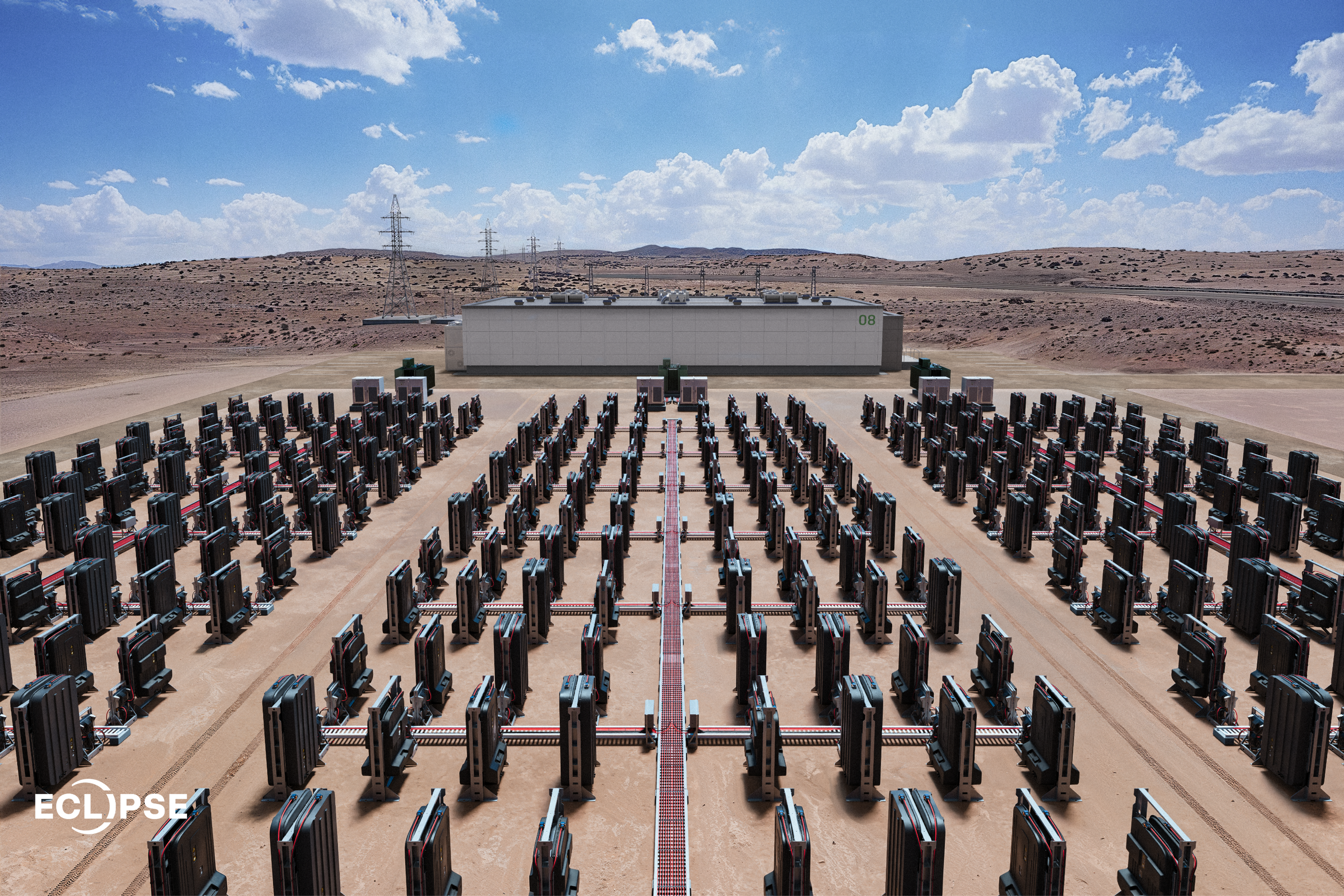
Electricity demand in the United States is surging to levels beyond the grid’s ability to deliver it, and far greater constraints are on the horizon. By 2028, data centers alone are projected to consume more than 12% of electricity (triple the demand of 2023) — while facing two to four-year wait times for connection to new power generation, and seven to 10 years for full transmission upgrades.Redwood launched a solution to this shortfall in 2025 by repurposing EV battery packs into grid-scale storage that can be deployed within months. By the company’s own estimate, Redwood Energy could supply more than half of the entire U.S. energy storage market by 2030.
That’s why it’s no surprise the most recently-launched business is the fastest growing. In the past year, Redwood has rapidly commercialized its energy storage business through major deployments with partners including Crusoe, Rivian, and GM, while expanding the platform underneath: A new South Carolina plant to increase domestic recycling and production capacity, a broader collection network, and fresh strategic capital including investors like Google and NVIDIA’s venture arm.
The wheels for this rapid growth were already in motion by the time Eclipse led the company’s $425M Series E in 2025, and the vision of Redwood as the only vertically-integrated, closed-loop energy management platform in the United States wasn’t a projection; it was proof, in tonnage, market share, and signed contracts. Roughly 70% of every lithium-ion battery recovered in North America now comes back through Redwood first, and is then fed back into the system in the form of remanufactured batteries and energy storage solutions to customers like Ford and GM from campuses in Nevada and South Carolina. When we invested, the flywheel was already turning. It was time to make it turn faster.
To understand how a "battery recycler" ended up building what might be its biggest business yet, you have to go back to where this started.
Multi-Act Businesses
Redwood’s leap from modest beginning into a generational powerhouse can appear both incredible and inevitable. As I’ve mentioned before, the most enduring businesses have multiple "acts": First as trailblazers who create a category, then as relentless innovators who push into bigger markets, build more valuable IP, and widen their moats. In physical industries, later acts compound even better.
Expanding could just have easily been Redwood’s downfall. Opening up additional business channels is a tricky undertaking. Companies often lose focus and prioritize the wrong things, cannibalizing their own value. Redwood avoided that trap because each expansion was a logical extension of capabilities it had already built, not a pivot away from its core. “A battery is such a complicated object: There are so many different attributes, suppliers, and value streams, and recycling gave us hooks into a bunch of different pieces of that value chain,” says JB.
Great founders recognize when the world has changed enough that an idea can become inevitable. Timing isn't luck; it’s judgment. The idea for Redwood was, fittingly, born out of JB's experience co-founding and serving as CTO of Tesla — arguably one of the most successful multi-act companies of our time. He saw battery volumes, EV adoption, and policy converge at the exact moment to build an entirely new industrial supply chain.

"The simplest way to think about how we have evolved is that it was a little bit about being in the right place at the right time," JB says. “Just like the early Tesla days, this has forced a lot of really first-principles innovation, which led to a really enduring advantage.”
Plus, with a founding team of Tesla veterans, JB went after this opportunity with world-class talent that had established themselves as experts solving first-principles supply chain problems, and had the capabilities to build category-defining technology from the ground up.
That combination of knowing when the market was ready, having the right team to execute, and building what the market lacked is what enabled Redwood's first act and every one that followed.
Act I: Create the Supply – Building the Above Ground Mine
In 2017, JB set up Redwood Materials in Carson City, Nevada, minutes away from the Gigafactory, and where Panasonic manufactured all of Tesla’s battery cells on-site. By 2019, Redwood was taking all of Panasonic’s cell manufacturing scrap (a partnership that would later expand to the full battery life cycle.) By 2020, Redwood layered a second feedstock stream: Consumer electronics, recovering materials from laptops, phone batteries, and delivery-fleet batteries through a deal with Amazon and e-waste suppliers.
This wasn’t just about recycling. It was the cheapest wedge for Redwood to own the supply chain. The next question was what happened to the valuable materials after they left its facilities.
Act II: Build the Chain – Link Recovery with Refining and Manufacturing
Turning recovered lithium, nickel, cobalt, and copper back into something a battery manufacturer could actually use required refining and processing that mostly happened overseas. So Redwood began pulling those steps inside, which was a page from JB’s Tesla playbook of owning the “unglamorous layers underneath.”
“There wasn't a supply chain that we could go to to buy a battery pack in those days or a motor,” says JB. “I feel we are redoing that same playbook in a different industry with recycling and re-manufacturing because we have fundamentally innovated new machines.”
The progression was logical: First separate the materials, then refine them, then remanufacture them into battery materials that could flow directly back into cell production. Each new capability solved an inefficiency the previous one exposed, enabling Redwood to capture more value from the same feedstock. Working backwards from their customers, Redwood learned to tailor recovery to what buyers actually needed rather than producing generic commodities. By 2025, that business was generating hundreds of millions of dollars annually from materials including nickel, lithium, copper, cobalt, and aluminum.
That’s what makes Redwood's second act more than an expansion into a larger TAM. More feedstock improved the economics, which supported more refining and manufacturing capabilities, which made Redwood more valuable to its partners, who in turn brought more material. This is how durable businesses compound into additional durable businesses. Redwood had created the supply and built the chain around it, gaining something even more valuable in the process: Visibility into what was coming back.
Act III: Close the Loop
By 2024, Redwood had nearly 70% of the North American battery recycling market — and an unmatched vantage point on the shift in what was coming back. Volume was rising, and the mix of materials was moving from smaller format consumer batteries into much higher-value EV packs.
“We started to see a tidal wave of EV battery packs coming back,” says JB. “Most people had predicted this and kind of knew it was coming in the future, but we were in the right position to see it actually happening, and we were able to see it before any other company had a viewpoint on it.”
Those packs could no longer meet the demands of EVs, but they still had real functional capacity. Simply taking the packs apart and recovering their materials would leave value on the table. Redwood saw a second life: Repurpose them as an energy storage system before recycling.
“I personally hate waste,” says JB. “And I love trying to find opportunities to be more efficient and extract value from things. So we went to work on how to innovate around that problem.”
The team and capabilities to create this new business were already there. Redwood CTO Colin Campbell had previously led all engineering at Tesla’s energy storage business, and he and JB both had the technical know-how and relationships to standardize wildly different batteries into one product.

“Leveraging a team with this innate background (and being in this perfectly-timed position of having all of the feedstock because of our recycling business) laid this whole opportunity out and let us go incredibly fast,” says JB.
Fast meant 10 months from the initial idea to Redwood Energy’s first deployment with Crusoe in the summer of 2025 — just as power was beginning to emerge as the most urgent constraint on the AI revolution. Redwood deployed a 12 MW / 63 MWh microgrid to power AI infrastructure, delivering a 99.2% operational availability since launch. Crusoe has since expanded the campus to nearly seven times its original compute capacity, establishing the proof point that Redwood Energy was an answer to the problem every AI developer was facing.
JB had expected to educate prospective customers on why storage mattered. Instead, he found customers already convinced and asking how quickly Redwood could deploy.
“I’d go to these meetings with leaders at these companies and I’m only halfway through the description and they’re like, ‘Yeah, yeah, yeah. We know all that. We’re sold’,” says JB. “They knew storage was the linchpin, but they didn’t know where to get it until then.”
GM and Rivian have since partnered with Redwood on energy storage projects of their own. GM became the first automaker to partner with Redwood across the entire lifecycle — 28,000+ metric tons recovered, ~10,000 packs slated for second life, a 1.5 MW / 7.2 MWh system at a Michigan plant — representing a marquee OEM with contracts across all three of Redwood’s acts at once. Rivian followed with the cleanest energy story: A 10 MWh second-life system at its Normal, IL plant — the first at a U.S. automaker's factory. Several other customers including neocloud companies and hyperscalers are also preparing to launch energy storage solutions with Redwood soon. In the coming years, Redwood also plans to supplement its refurbished battery business by offering new battery modules to customers.
The economics of Redwood Energy show how much the third act compounds the first two: For a relevant battery, JB estimates Redwood can generate three to four times more revenue by deploying it into storage before eventually recycling it. The strength of Redwood Energy is, in turn, opening up yet another opportunity to expand the business: In the coming years, Redwood plans to supplement its refurbished battery business with new battery modules, as the company expects the growth rate of the storage business to exceed the supply of refurbished batteries.
Redwood created the supply, then built the chain around it. Now the chain has become a loop.

The Full Circle
Redwood isn’t a battery recycler. It’s a company building the infrastructure for American energy sovereignty, each partnership and business adding capabilities, relationships, and advantages that opened a larger market from a stronger position than the last. The mission hasn't changed since 2017. Redwood has simply earned the ability to pursue more of it.
It’s what we at Eclipse call a durable compounder. The best multi-act companies don't reinvent themselves every few years. They solve a foundational problem, build capabilities and advantages in the process, then recognize when those advantages give them the right to solve the next one. Each act strengthens what came before while expanding what the company can become.
It's also exactly what we built Eclipse's growth strategy to find and help scale: Companies whose next act isn't a departure from the first, but a consequence of everything they've built along the way. Redwood isn't the exception to that thesis. It's the proof.