In my Industrial Scaling Playbook Series, I walk through some of the critical components of company-building. None of those are possible without solid leadership, and this is especially true in pivotal moments like a major fundraise or commercial expansion.
The moment when your company is ready to expand is exciting. You finally have the capital, team, and market confidence to build what you really need to.
It’s also one of the hardest transitions, and many companies don’t make it out on the other side.
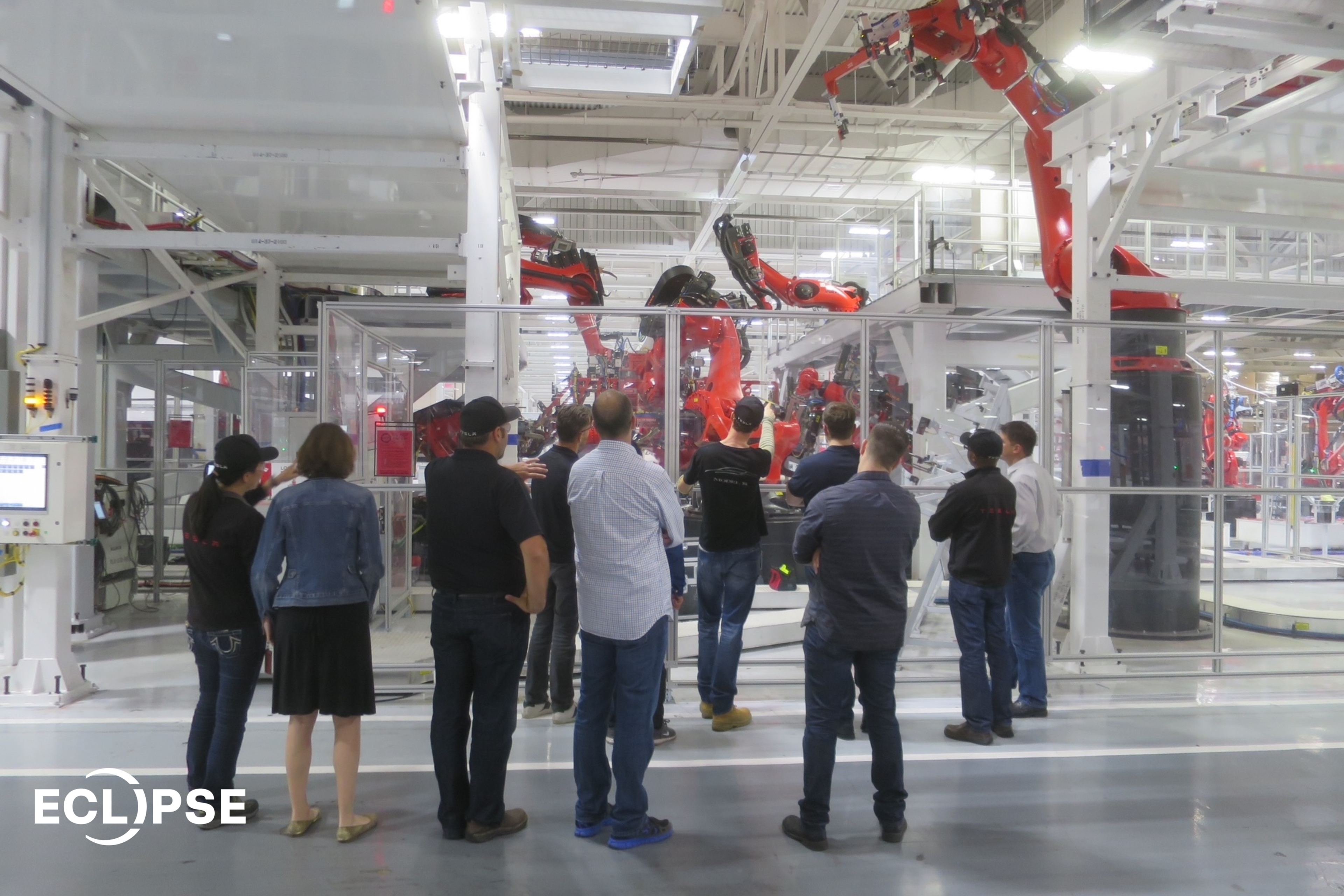
Watching several companies scale, both inside and outside the Eclipse portfolio, made me reflect on the many execution-related challenges I experienced firsthand while working at organizations like Tesla and SunPower as we scaled from < 100 people to > 1000 people. Most issues I met head-on, and it took quite a bit of pain to see and resolve them. I’m sharing some of those hard-learned lessons here, starting with the overarching dynamics to watch for.

1. Speed looks like chaos.
Flexibility and moving fast on opportunities starts looking like a lack of focus and dysfunction to the broader organization. At 50 people, everyone understands why priorities shift. At 1,000 people, most just see whiplash. They lose confidence in the direction, and ownership fades because it feels like it won’t really matter.
The problem isn't that you are moving fast, it’s a problem of communication and prioritization.
2. Ownership dissolves into functional groups. Things once owned by an individual start being owned by "groups." Shared responsibility = no ownership. This slowly extinguishes the fire of execution.
3. Complexity becomes self-generating. The organization's natural inertia is to create additional process, structure, and complexity. People start executing on the system rather than solving actual business and technical problems.
4. Decision-making bottlenecks at the top. With diluted ownership and growing complexity, decisions slow and pile up on you and a few senior leaders. You become the bottleneck. Not because you’re slow, but every decision has to work its way up the chain, where it stalls or gets made on incomplete information.
5. The headcount delusion. All of the above creates a feedback loop: Teams fall behind and become convinced they need more headcount. But more people makes every one of these problems worse. A full bank account accelerates it — the narrative becomes "we were given money to scale." Adding people to an organization that already lacks communication and strategy only deepens the disorder, and too often massive layoffs become the only way to course-correct.
6. Reality gets filtered. You get disconnected from what's actually happening at the working level. No leader is immune from this. The natural human instinct is to report good news and minimize bad news. And at this scale, problems can stay hidden far longer because of the sheer complexity. All it takes is one meeting where you react negatively to bad news, and people learn to filter, using "hope" to rationalize not surfacing problems. Bad surprises start showing up, and you lose the ability to see and help solve the real barriers your teams are running into.
7. Leaders optimize locally. Even your best leaders start unconsciously "protecting" their teams, optimizing for their own group over what the business needs — more so as company-wide objectives blur. Everyone's working hard, but the force vectors aren't aligned. When you start hearing "my team," that's a warning sign.
None of this should be revelatory to leaders skilled enough to reach this stage. Yet many believe "it's not happening here." In my experience it absolutely is — the only question is how long it takes to recognize it.
Here's what I found helpful. Most of it sounds simple but is very hard to do well — and that's the difference between a startup with great tech and a startup with great tech that can actually scale.

1. Radically clear priorities and ownership. Double down on defining clear, simple objectives — not the "how" but the "what" that must be achieved. Then assign direct ownership for each one, not to a team or group but to a single person who feels 100% accountable. That person has a team (not necessarily their function) on the sub-elements, and the same ownership cascades down.Ask yourself: Do you have a single name against each top priority? A clear list of the people supporting each owner? Are those owners visible to the whole company, reporting out on status regularly? Is this woven into the natural cadence of running the company, not a one-time exercise?
2. Get ruthless about saying "no."The hard part is deciding what you're saying "no" to — what falls below the line and won't be worked on right now. If you don't say "no," no one else in the organization will either, and you get the diffuse priorities and complexity spiral above.
Remember: "no" means not now, not never. But you must get better at it — it's one of the most important disciplines at this stage.
Elon was incredibly good at this. During each car's critical launch period the directive was clear: Stop doing anything not 100% connected to hitting the launch date or ramp. If your job didn't normally touch those areas, find a way to help — and if you couldn't, you were asked to leave. Harsh, but extremely effective and empowering to the teams at Tesla.
3. Push decisions down. Speed over perfection.Owners break each priority into smaller pieces, and the same rule applies — individual owners with the authority to decide for what they own. Push decisions as low as possible. Better to decide quickly and recover if wrong than to slow a 1,000-person organization waiting on the top. I guarantee that at your stage, the company is constrained by you and your leaders, not by the working level.
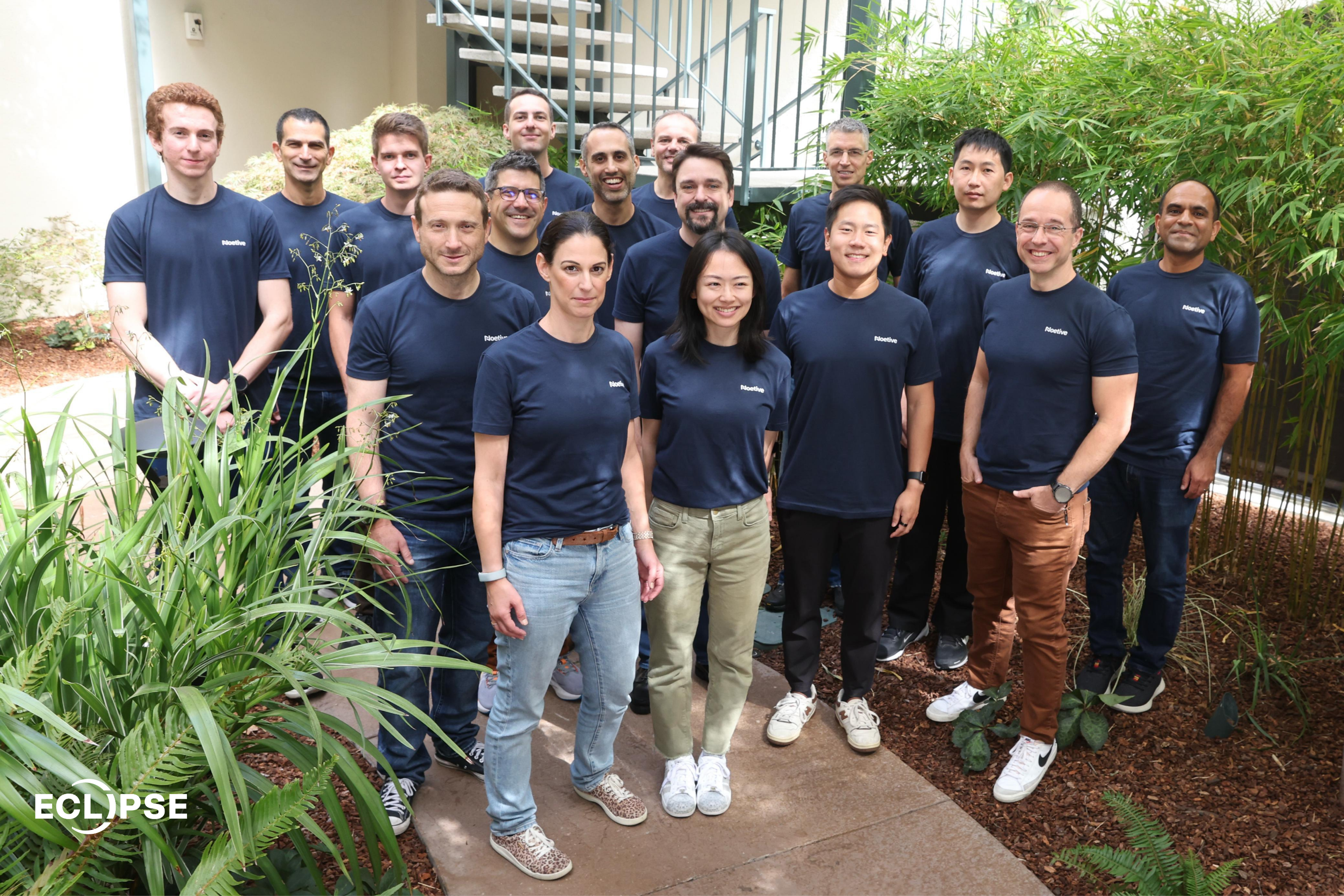
4. Create tribes around execution, not functions. We're tribal by nature — leverage it. Build small teams around each execution focus area and let them form an identity: A name, a t-shirt, a sense of belonging. It sounds silly, but look at how the highest-performing sports teams work. Make the leader and members visible to the whole company, and have them — not the functional leaders — update on status. Keep teams to 8-10 people, drawn from the relevant functions but identifying as this execution team first, their function second.
5. Audit and reinforce constantly. None of this works without constant reinforcement. Walk around and ask people three questions:
The answers tell you whether the system is working. Get to every group each week — it's not a temperature check, it's how you stay connected to reality, spot barriers early, and signal that ownership and clarity matter.
Cerebras CEO Andrew Feldman describes reinventing his leadership at every stage of growth: At 25 the team ate lunch together; at 100 he knew everyone's strengths and their spouses' names; by ~800, spread from Bangalore to Dubai, he'd never met much of his team. The job shifts from personal contact to relentless clarity — repeating the story over and over so people you barely know feel their work matters to something larger.
6. Skip the skip-levels. Do IC lunches instead. Skip-levels peel back only one layer of reality distortion. Better: A weekly, lighthearted lunch with ~8 people from the IC level. Ask the same three questions, then add: "Where are we really at? What's the bad news no one likes to talk about?" People will hesitate — encourage them.
And here's the critical part: You'll hear things that anger you. Don't react. Try to understand, and thank them for surfacing the issue so it can be fixed. Do this consistently and problems become treasures — things to surface and solve, not hide and fear. These lunches are also a chance to share the vision, reinforce priorities, and thank people, and they can be one of the highest-leverage hours in your week.
7. Your reaction in meetings sets the culture. This is one of the most powerful and underestimated tools you have. Do the opposite of what people expect. When someone presents bad news honestly, celebrate that they surfaced it, then turn to the question that matters: How do we fix this, and who owns solving it? When you're handed nothing but good news, that's when to probe — what's not working, what are we not seeing?
Most important, react to how people treat issues, not just the issues:
Use anger only to correct cultural misalignment, never in response to someone raising a problem. I learned this early, presenting quarterly operational updates to TJ Rodgers, CEO of Cypress Semiconductor — Forbes' "Toughest Boss in America." One quarter, yields were down and we'd missed the plan badly. I came in expecting to be torn to shreds, and opened by owning the problem and walking through a deep root-cause analysis. TJ said nothing. Then, after a long pause where I was sure I'd be handing over my badge, he smiled: "Great work. This is exactly the right way to address the difficult problems we take on here. Thank you." The next quarter we flipped it and beat the plan handily. I walked in expecting applause — and got ripped apart. We'd become overconfident and complacent, and TJ's reaction snapped us back to pushing just as hard as when we were struggling.
8. Build a culture of accountability. Start with the basics. Do meetings start and end on time? Do they close with a clear review of actions and owners? And most important, does the next meeting on that topic open with the status of those actions? It sounds simple, but it's the backbone of execution at scale — systematize accountability and follow-through until it's muscle memory.
9. Make performance visible. Make progress on key priorities visible — daily ideally, weekly at a minimum. When performance is visible, problems can't hide, good work gets recognized, and everyone can see whether they're winning or losing. Transparency is the enemy of drift. And yes, I hear constantly that some things are hard to measure. That's usually an excuse for shallow thinking: If something is truly a top priority and properly defined (you can tell when it's achieved), it can almost certainly be measured.10. Use a crisis to create a breakthrough.
Even a deliberately manufactured crisis can focus a team — though I wouldn't personally recommend it. At SunPower, as we ramped a new line of solar cells, TJ ordered us to crush any that tested below 20% efficiency — literally, with a hammer. We thought he was joking; he was dead serious. The industry standard was 16-18%, so those few extra points were our whole value proposition, and TJ knew that accepting anything below target and scaling it would make future improvement far harder. Crushing the cells created a real internal crisis, and the engineering team had no choice but to find the last two points.

I had a similar experience at Tesla. Just before the Model S launch, Elon ran the numbers and realized the battery and motor could blow past our 5.4-second 0-60 target. Minutes before going on stage, he floated a performance version to the CTO, our head of engineering, and me. Our answer: "We have ideas — maybe in a year." Unfazed, he walked out and told the press two things: The Model S was about to ship, and it would launch with a performance variant hitting 0-60 in 3.1 seconds. There was no plan to do that. The public promise forced the organization to scramble and invent paths that didn't exist. Reckless, some would say. But Elon understood that the first impression would define the brand for years — and 3.1 seconds wasn't just fast for a sedan, it was supercar territory. It did define Tesla, exactly as he intended.
Again, there's no magic here — just deliberate, consistent execution of the basics. A COO helps, but isn't the solution. These are things you and your leaders each have to do.If this resonates, reach out and let me know how I can help. It's a fun journey!
Follow Eclipse on LinkedIn or sign up for Eclipse’s Newsletter for the latest on rebuilding essential industries