For seventy years, space technology has been built like a series of custom projects. Most critical orbital systems are bespoke, hand-built, and take years and hundreds of millions of dollars to field.
Life on earth has outgrown that model. Every organization that depends on knowing what is happening on earth, in real time, at scale, is relying on systems a generation out of date. Wildfire detection, communications, national security, and countless other applications each demand industrial-grade orbital infrastructure. Not a single satellite, but constellations. Not isolated capabilities, but coordinated missions.
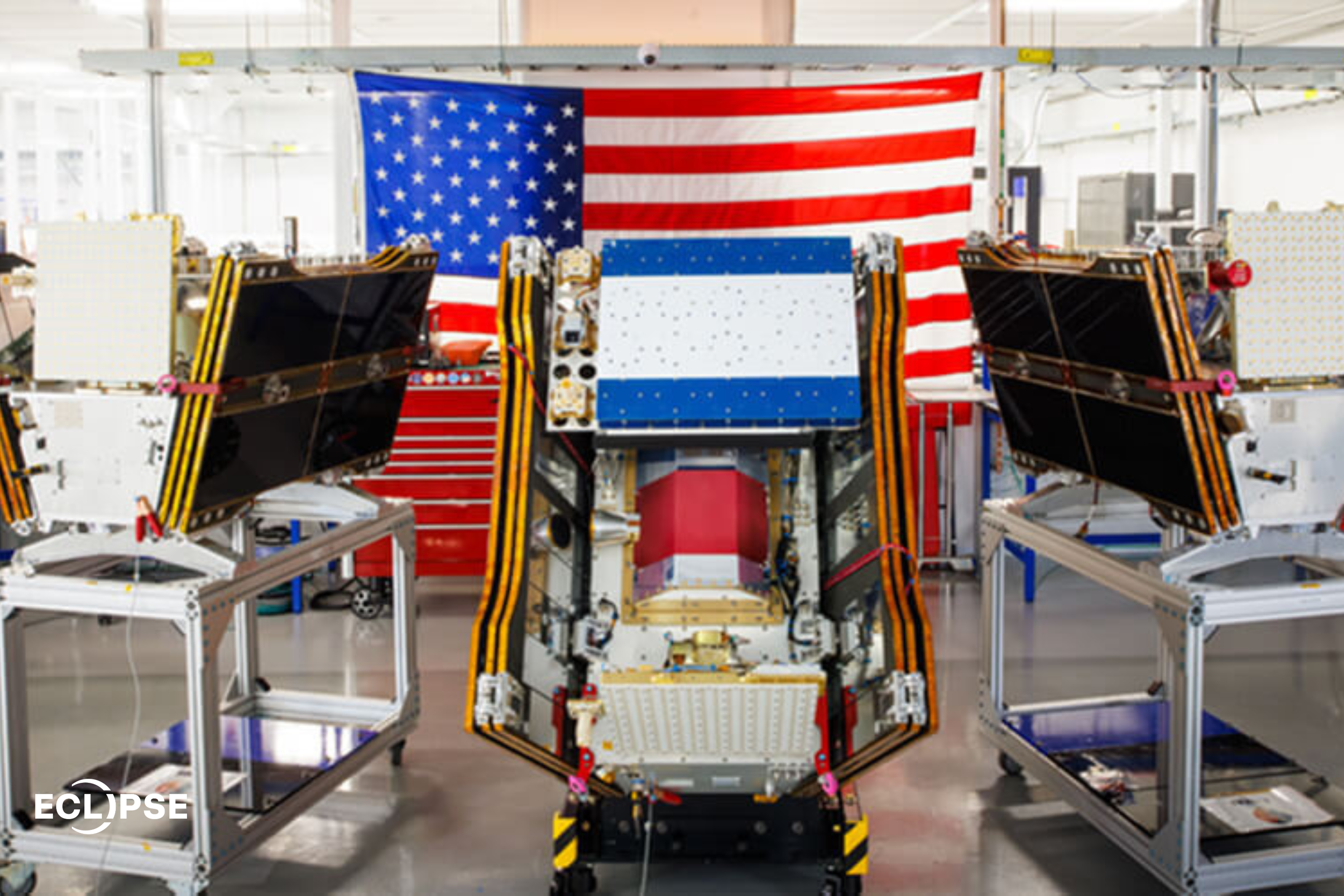
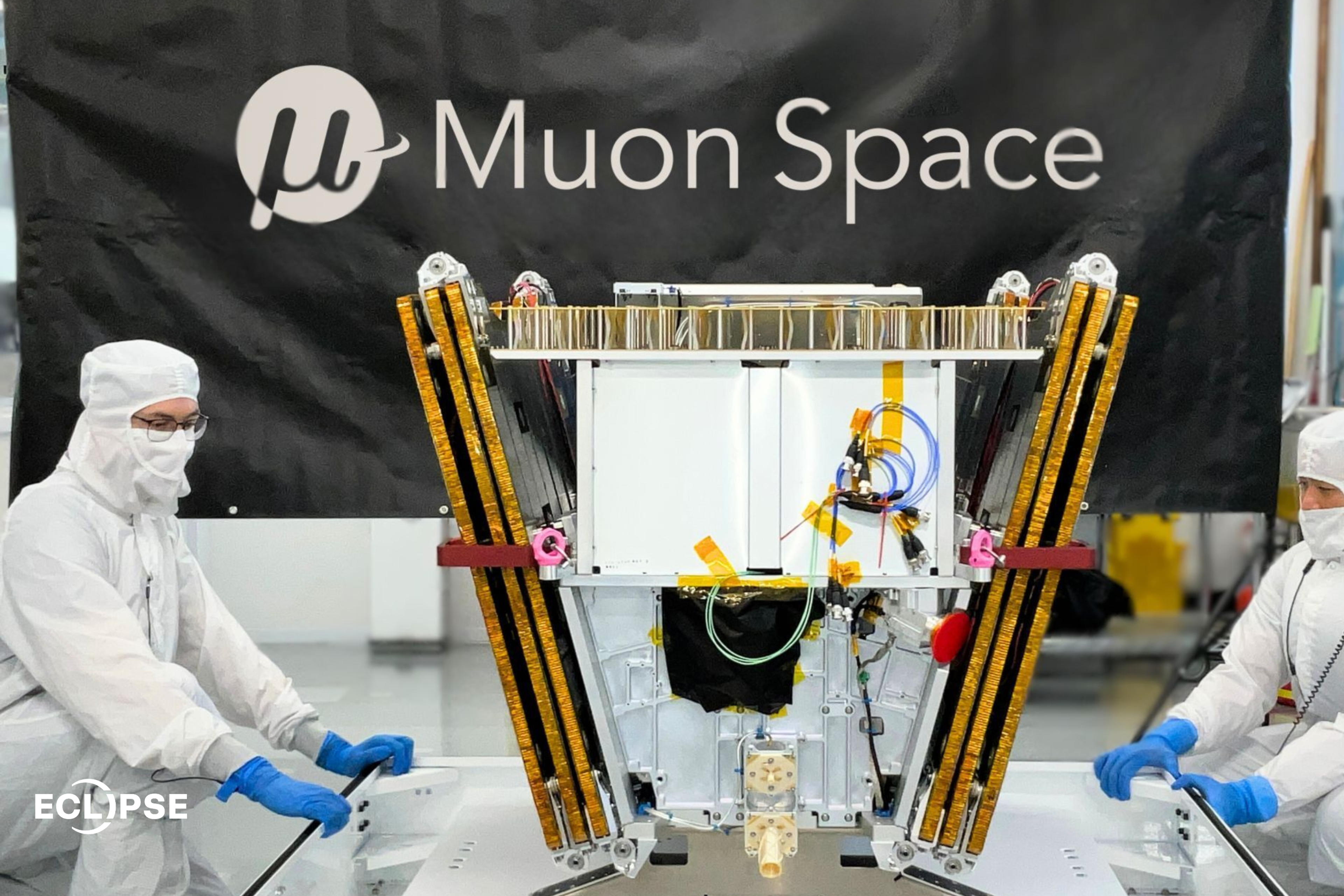
That’s the problem Muon Space set out to solve by building the Mission Foundry: A production system designed to deliver custom missions with the speed, repeatability, and economics of manufacturing. It spans the entire stack, combining modular satellite platforms, in-house payloads, and Muon OS to connect design, production, and operations into a single system. Where the traditional model spent years hand-building one satellite at a time, Muon is building hundreds each year while tailoring every mission to the outcome the customer actually needs.
This isn’t a satellite sold as a product in a box. It’s a mission delivered as an outcome at a cadence that was never possible before. Muon sits at the precise intersection we look for: A defensible platform, a team that has done it before, real customers pulling real missions into orbit, and a business whose economics get better as it scales. Eclipse is proud to be leading Muon’s $250M Series C on this mission.
The scope of what is possible with Muon’s unique foundry approach is exemplified in the company’s work with wildfire detection. Unlike legacy monitoring systems (which either see the whole planet at low resolution and revisit it a few times per day, or systems that only see a small patch and rarely), Muon designed Earth Fire Alliance’s constellation-based FireSat system to detect a fire as small as 5 meters by 5 meters. Starting with a three-satellite initial capability, FireSat will scale toward a global revisit rate of one hour or less by 2029, followed by an ultimate goal of 20 minutes or less in the early 2030s. EFA’s FireSat is designed and operated by Muon and supported by philanthropic supporters including Bezos Earth Fund, and the Gordon and Betty Moore Foundation. FireSat can catch a fire in the minutes that actually matter — representing a step change over the existing systems that haven’t changed in decades despite the fact that wildfires have become one of the defining threats of our time.
At a time when devastating wildfires are raging across Europe and North America, the need for FireSat is inarguable. And the system doesn’t stop there: The same infrared payload and mission architecture can be reused for weather, environmental monitoring, theater imagery, and national-security applications. Muon currently has several major commercial and government partnerships in its pipeline representing the full breadth of these capabilities.
Making bespoke missions repeatable unlocks the economics of a real platform business, where every mission improves the next and more of the value shifts from hardware to operations and data. That is a multi-decade replacement and expansion cycle measured in the hundreds of billions. The window opens for whoever can meet it, not one exquisite satellite at a time, but at the tempo of a production line.
This is exactly the capability Muon has spent the last four years building as demand has surged. The company will use this latest funding to scale the Foundry by building out high-mix manufacturing, extending its lead in the payloads that make missions possible, and standing up the next generation of platforms. Muon has been remarkably capital-efficient to date, launching 11 satellites in orbit with 100% mission success rate, and the company currently has the capacity to manufacture more than 500 satellites per year. The company has hit (or exceeded) their plan every year since founding. This is capital meant to compound an already-working machine, paving the way for their eventual public debut.
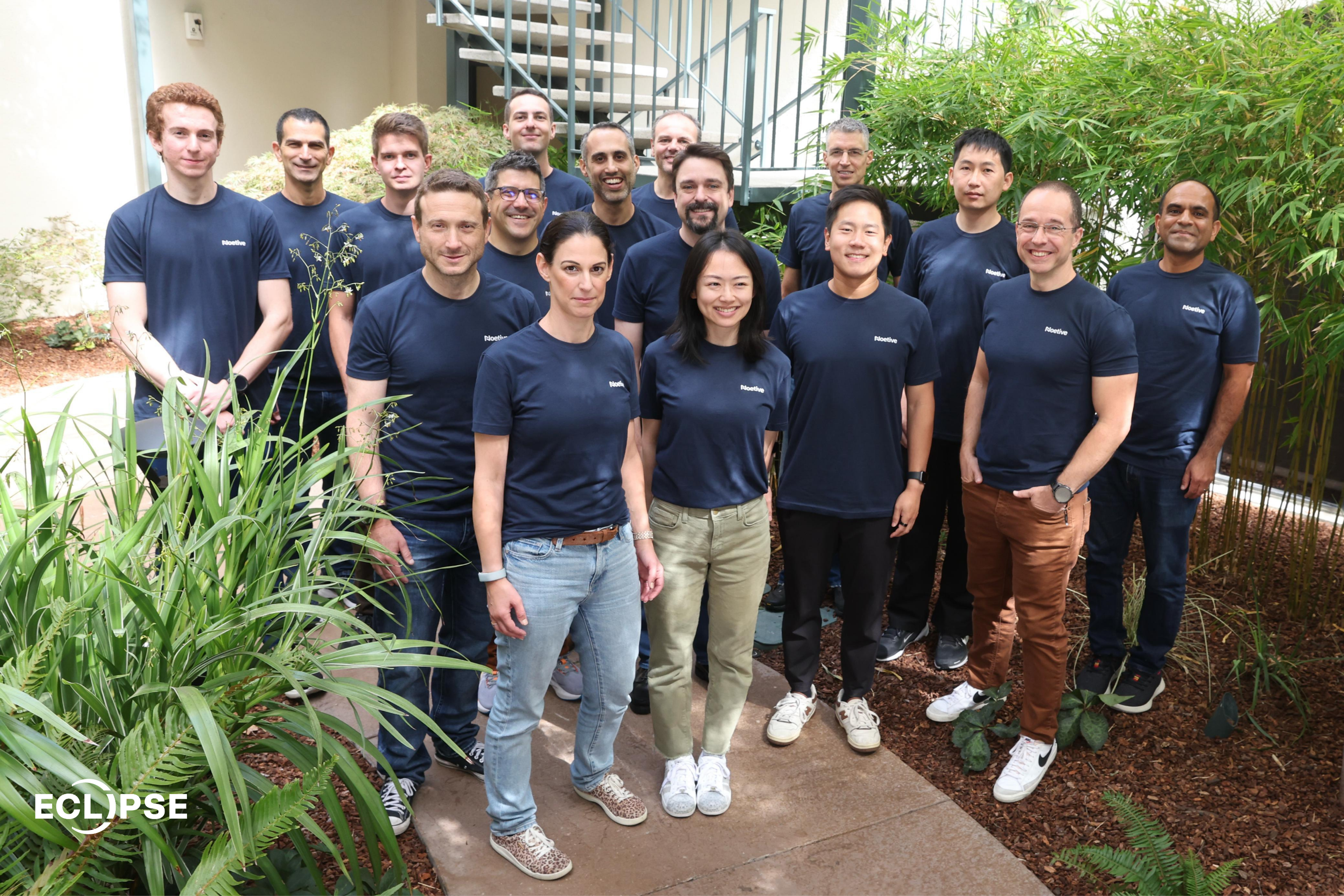
When a team tells you they can make the bespoke repeatable, the only real evidence is whether they've done it before. This one has. Muon Founder and CEO Jonny Dyer came out of Skybox Imaging, one of the first companies to prove that a constellation of small satellites could out-perform the exquisite, billion-dollar systems that came before it (a bet vindicated when Google acquired it in 2014). Years before Skybox, Jonny held engineering roles at both SpaceX and Blue Origin in the early days of both companies. The bench around Jonny carries the same lineage: These are operators who have scaled hardware businesses and built for the most demanding customers in the industry.
Space is the largest of the frontiers Eclipse set out to modernize more than a decade ago. In recent years, it’s become clear that the industrialization of space will be one of the most consequential undertakings of our time. Muon is building the machine that makes it possible.
Read more on today’s news from Bloomberg.
Follow Eclipse on LinkedIn or sign up for Eclipse’s Newsletter for the latest on rebuilding essential industries.