The AI revolution is driven by one long chain of capabilities: Applications rely on models, models rely on compute, compute relies on data centers, and data centers rely on energy. Disruption to any one of those links affects the whole chain, but energy is different: It functions as the locomotive and everything else is the cars and caboose. If it doesn’t work, nothing does.
Today, that locomotive is exactly where the most pressing strain is emerging. Models and compute have advanced rapidly while the infrastructure beneath has barely chugged along. The electrical grid is under mounting pressure, transmission is slow and complex to build, and new power generation can take years to bring online. Energy has become the defining constraint on the next phase of AI.
The path to a reliable, resilient U.S. energy system runs through cheap storage: That’s the piece that turns already-abundant solar into always-on power. Eclipse has been behind this mission across the entire spectrum since our inception, from battery materials to recycling and now to firm power via storage. We look for companies that don’t just create the breakthrough technology, but can carry it to scale at the speed we need to radically modernize whole industries, as well as our entire economy.
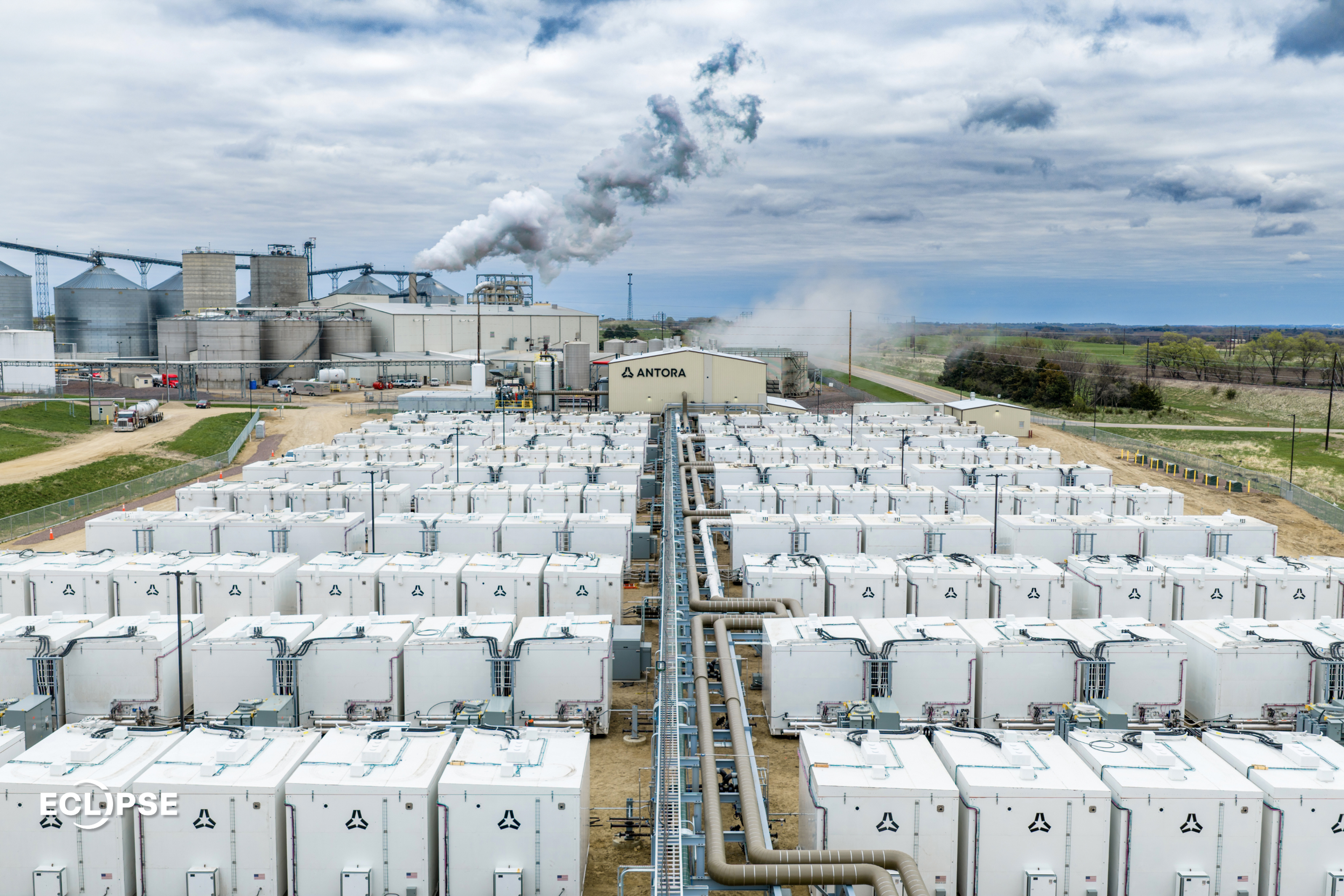
Antora is one of those companies. The company’s modular thermal battery system stores energy as heat in blocks of carbon (one of the most abundant resources on earth) and delivers it back as either industrial steam or firm electricity. The company is going straight at the core constraint of the AI era: Always-on electricity for the hyperscalers racing to build out AI. We’re thrilled to be co-leading Antora’s $550M Series C as they go after one of the biggest challenges to reindustrialization.
Over the past year Antora moved faster and with more conviction than anyone in the category, deploying one of the largest battery systems on Earth and standing up a multi-billion-dollar data-center power pipeline in a matter of months. And that's just the company’s second act. Founded in 2018, they started by perfecting the technology they would eventually build a company around, and then targeted industrial heat for industries like chemicals, biofuels, and food processing. The very same battery module that enabled that business is also perfect for Antora’s data center play: The same technology and same product has opened up a market with unprecedented demand for fast, affordable energy.