Share
The conversations that defined Cerebras’ (and Eclipse’s) 10-year journey from impossible to inevitable
In March 2016, less than a year after founding Eclipse, we wrote our first memo on Cerebras, a then-nascent company with a vision that sounded impossible: Build a single giant chip that could train AI workloads in days, not months, at a fraction of the cost of GPU clusters.
The idea defied decades of semiconductor belief. Wafer-scale computing wasn't merely unproven; the industry had concluded it was impossible. As chips grew, yield collapsed, thermals spiraled, and packaging grew exponentially harder. The accepted answer was to cut wafers into smaller dies and wire them together. Cerebras proposed the opposite: Solving every size-related problem at once — while still assembling its team, and years before the AI boom had arrived to justify the bet.
Founded just months apart, Eclipse and Cerebras shared a similar vision for the future. We believed AI would become the most powerful lever for transforming both physical and digital industries, and the compute to power it would have to look radically different from architectures already straining under demand.
But in 2016, backing Cerebras meant betting against an entire industry's consensus. As outliers ourselves, we were up for it. Looking back, a handful of conversations stand out for the way they changed the trajectory of the company. Together, they tell the story of how Cerebras went from a pitch that sounded unreasonable to the infrastructure layer of the reasoning era.
As Cerebras CEO and Co-Founder Andrew Feldman put it simply: "In 2016, AI hardware was not cool. Eclipse was among the first to believe in us.”
When Andrew Feldman first started pitching his idea, wafer-scale computing had been a theoretical conversation in semiconductor circles for more than half a century, and theoretical was where most people thought it would stay.
By any reasonable measure, Andrew and the rest of the founding team had earned the right to challenge that conventional wisdom: In 2007, he built SeaMicro, the dense-server company that he later sold to AMD. He then ran AMD’s data center and server CPU business units, where he focused on developing next-generation compute infrastructure designed for efficiency and scale.
When he started thinking about his next move, AI was barely scratching the surface of how it would impact the world, but compute capacity was already falling behind. At the same time, advances in semiconductor manufacturing, packaging, power delivery, and cooling made new architecture feasible, and the coming AI workload convinced Andrew and the Cerebras team that wafer-scale integration was worth trying again.
“So we set out to change the compute landscape completely. Not a little bit, but rock it to its core,” says Andrew. “We thought we could do that by building a new type of computer optimized for a particular type of work that we had come to believe would be the dominant workload in the years ahead.“
By the time Andrew and five of SeaMicro's six founding executives reunited in 2016 to build the world's largest chip, they brought with them more than a hundred patents, billions of dollars in products, and decades of experience shipping complex technology at industrial scale.
Still, they were devoting themselves to build something that the semiconductor industry had spent 75 years saying could not be built.
That’s why Eclipse Founding Partner (and now Emeritus) Pierre Lamond was one of the first people they called. Pierre had spent decades on the frontier of the semiconductor industry as an operator, executive, and later, investor. Crucially, he had spent years thinking about the exact problem Cerebras was trying to solve. In the late 1970s, legendary compute architect Gene Ahmdal told Pierre he believed that wafer-scale was the inevitable endpoint of computing architecture. Yet, for the next four decades, nobody could make it work.

“Then Andrew reached out to me with an idea that was really interesting from the very beginning,” says Pierre, who had backed Andrew at SeaMicro (and also became good friends in the process). “He saw that we could take advantage of some of the advances in semiconductor development, and then proposed some really elegant solutions for the interconnecting and lithography challenges others hadn’t thought of.”
By treating the wafer as a distributed network that could route around defects, rather than as a single monolithic chip, the Cerebras team believed they could overcome the yield and communication challenges that had defeated earlier designs. And Pierre believed Andrew and the rest of the Cerebras team could do it. On top of their extensive engineering and company-building experience, they had an extraordinary ambition to build something totally new.
“The technical quality of the team was way above average, but they also had something that is often missing in startups: Because they had had some success before, they wanted to show that they could build something bigger and be even better,” says Pierre. “They weren’t afraid to take big risks.”
As Cerebras Co-Founder and CTO Jean-Phillipe Fricker wrote in 2026, Pierre was the ideal board member because he truly understood the sheer scope of the company’s mission, was prepared for the engineering and manufacturing challenges, and, importantly, was able to connect with (and translate for) other potential investors.
“Pierre was technical. Some investors are not,” wrote Fricker. “It really helps to have someone on your side of the table who speaks your language — and the room's. Who can identify risks the way you do and translate for the rest of the room.”
Not only did he help the team interrogate their idea internally, he helped get everyone else they needed on board. The importance of these early conversations wasn't simply access. It was validation from people who had spent their careers building the semiconductor industry.
This mattered when the company needed to convince TSMC, the biggest fabricator in the world, to change their production lines so Cerebras could make a wafer-size chip.
“As a startup, you could try calling the local salespeople, but they’re not even going to answer the phone,” Fricker writes. “Pierre knew Morris Chang, CEO of TSMC, who Pierre interviewed when he graduated from Stanford in 1963. One phone call, ‘You might want to listen to these guys,’ and we had the meeting.”
When you are attempting something nobody has ever done before, there is no playbook. No expert can tell you exactly how long it will take. Every breakthrough story compresses the years between idea and success. Living through them is different.
The hardest stretch for Cerebras was between 2017 and 2019. "There were 18 months when we couldn't make a single chip work," Andrew recalls. "We were burning $8 million a month. Every six weeks we'd sit with our board and say, ‘Not yet. Not yet. Not yet.’"
The instinct of most investors when a company is burning $8 million a month without a product is to push for a pivot, a leadership change, or a strategic alternative. The instinct of operators who have built hard things before is different. They recognize what eighteen months of negative news looks like from the inside of the only path that actually works.
As Andrew writes, "Pierre and Lior didn't flinch. The Eclipse team was with us. They asked the right questions, trusted the process, and stayed patient."
The patience and willingness to work directly alongside the team — spending entire days in the office with them as they worked through technical issues, contacting suppliers from all over the world, and testing different strategies — came from the Eclipse team’s collective decades worth of operating experience in hardware-centric industries.
“It’s always difficult to do something new, and what Cerebras was doing was completely new,” says Pierre. “But we were never discouraged. We knew they could do it.”
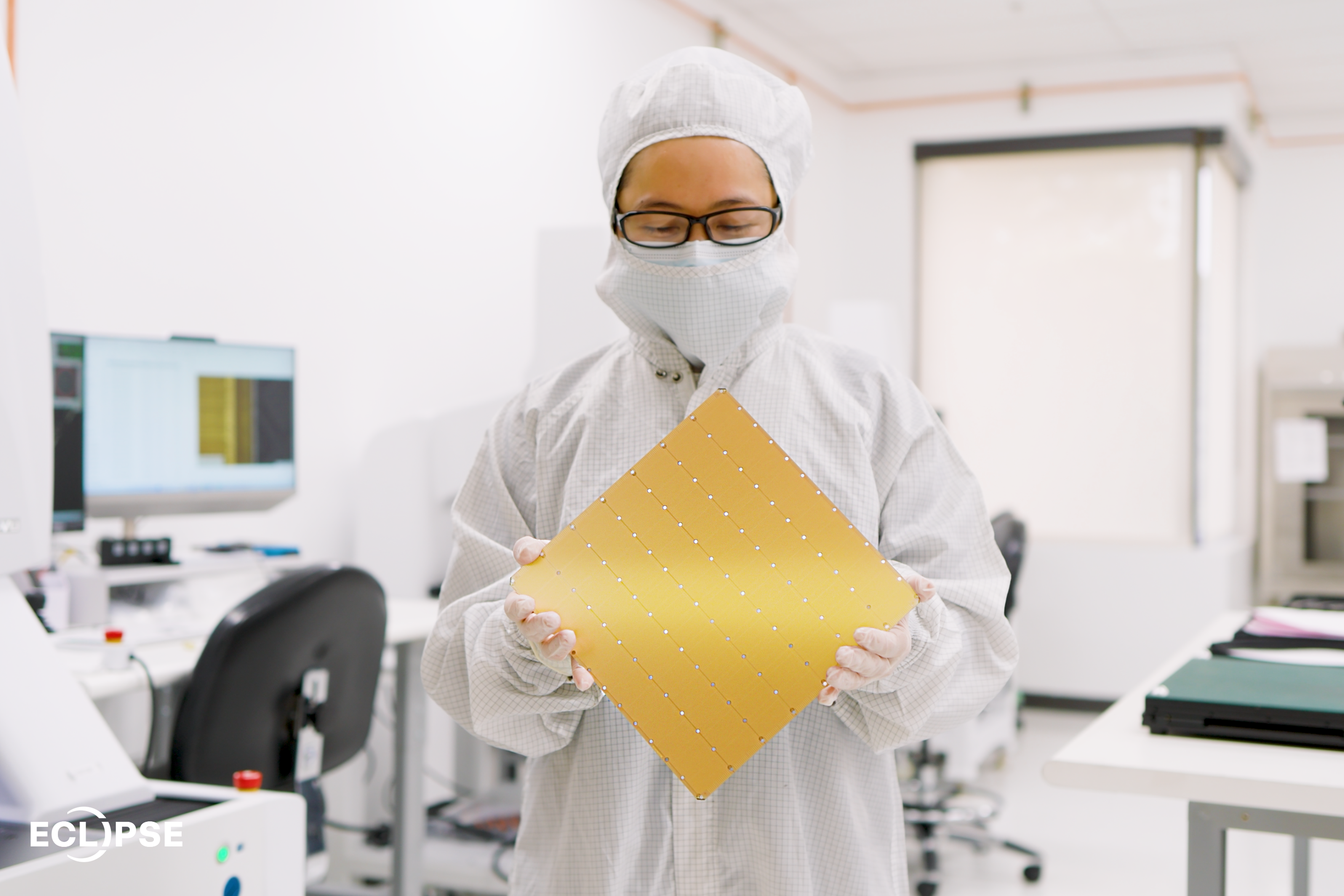
In August 2019, the first wafer worked. Cerebras Co-Founder and CTO Sean Lie unveiled it on stage at Hot Chips that fall. The dinner plate-sized chip contained 1.2 trillion transistors, 18 gigabytes of on-chip memory, and memory bandwidth orders of magnitude beyond competing systems. The room erupted in applause.
As Pierre wrote at the time: “Cerebras will define the AI generation.”
The prediction had become the product.

The Eclipse team knew that building anything at scale, from a fab-class chip to a fleet of autonomous trucks or a software-defined factory, means crossing a long and expensive valley between "it works in the lab" and "it works at scale, on contract, every day."
In 2019, the hard question wasn't whether the chip worked. It was: What now?Cerebras had built the most powerful piece of silicon ever made and needed partners who could scale it. They needed someone willing to put real capital and a real workload behind an architecture the world had not yet learned how to use.
As Andrew later reflected, "When our first wafer worked in August 2019, the technology was solved. But it was still 2019. OpenAI was nascent. There was no Anthropic. AI was still a parlor trick."
Then came a series of conversations that changed the trajectory of the company. To prove their technology could scale, they needed an unconventional partner. It couldn’t be another Silicon Valley tech company. It needed to be an organization pursuing an equally audacious goal.
"We needed someone bold enough to take the risk," Lior recalled.
Thousands of miles away, the UAE was doing that. Backed by His Highness Sheikh Tahnoon bin Zayed Al Nahyan, Chairman of G42, Abu Dhabi had invested heavily in AI companies, data centers, and cloud infrastructure, with the goal of making the country a leading AI hub by 2031. Working closely with Sheikh Tahnoon, Peng Xiao, and the G42 leadership team were searching for a way to build world-class AI infrastructure while most of the industry relied on the same established vendors.
Cerebras offered a radically different path, but winning G42's trust would not be easy.
At the time, Cerebras was still an emerging startup, while G42 had longstanding relationships with technology giants like NVIDIA and AMD. Betting on an unproven architecture was controversial, and convincing G42 that Cerebras could deliver required far more than a pitch deck.
Leveraging Lior's relationship with Sheikh Tahnoon through DriveNets (the networking company founded by his brother, Ido Susan), Eclipse helped bring the teams together. Over the following months, Eclipse and Cerebras made more than twenty trips to Abu Dhabi, meeting repeatedly with Sheikh Tahnoon, Peng, and the broader G42 team. The conversation was simple: Could Cerebras deliver at the scale G42 envisioned?
Eventually, G42 agreed to start small. The companies launched a pilot project, and Cerebras delivered. That success led to Condor Galaxy, G42's flagship AI supercomputing initiative with Cerebras and one of the world's first large-scale AI supercomputing networks. Once the pilot proved the model worked, it unlocked a much deeper partnership and helped establish Cerebras as a credible alternative in the global AI infrastructure race. In 2021, Cerebras gave them the architecture; G42 gave Cerebras the demand curve no enterprise account could underwrite.

The scope of the partnership was so significant that some pointed to the customer concentration risk. Andrew viewed it differently.
“The way to catch big customers is to first catch one and learn: Build the muscle, change your supply chain, learn how to work with a large customer,” he said on the 20VC podcast. “Once you have that muscle, you’re in a position to go out and win the next one.”
G42 gave Cerebras the chance to build that muscle. The partnership helped transform wafer-scale computing from a breakthrough technology into a commercial platform capable of serving customers at global scale.What G42 unlocked, the rest of the market followed.
Andrew has framed Cerebras as building the infrastructure layer for the reasoning era. The internet needed fiber. Mobile needed towers. AI reasoning needs fast inference at a massive scale.
After G42, Cerebras had established its ability to power cloud-scale training and inference. But it still needed a major partnership to truly show how wafer-scale integration was a speed differentiator for inference at a massive scale.
“We were looking for a blue chip AI company to validate fast inference, and there was nobody bigger or better than OpenAI,” says Lior.
Lior broached the topic with OpenAI CEO Sam Altman in early 2025. While Sam was an early investor in Cerebras (and he and Andrew had long collaborated with one another), integrating their technology was always the next frontier. But as Sam told Andrew, OpenAI was starting to struggle to keep up with demand, and saw the importance of fast inference. They kicked off a pilot, and the difference was immediately clear.
“We got into some trials and testing and their guys just said ‘Woah. We understand now’,” Andrew said later on the No Priors podcast. “It was just so much faster than the competition.”
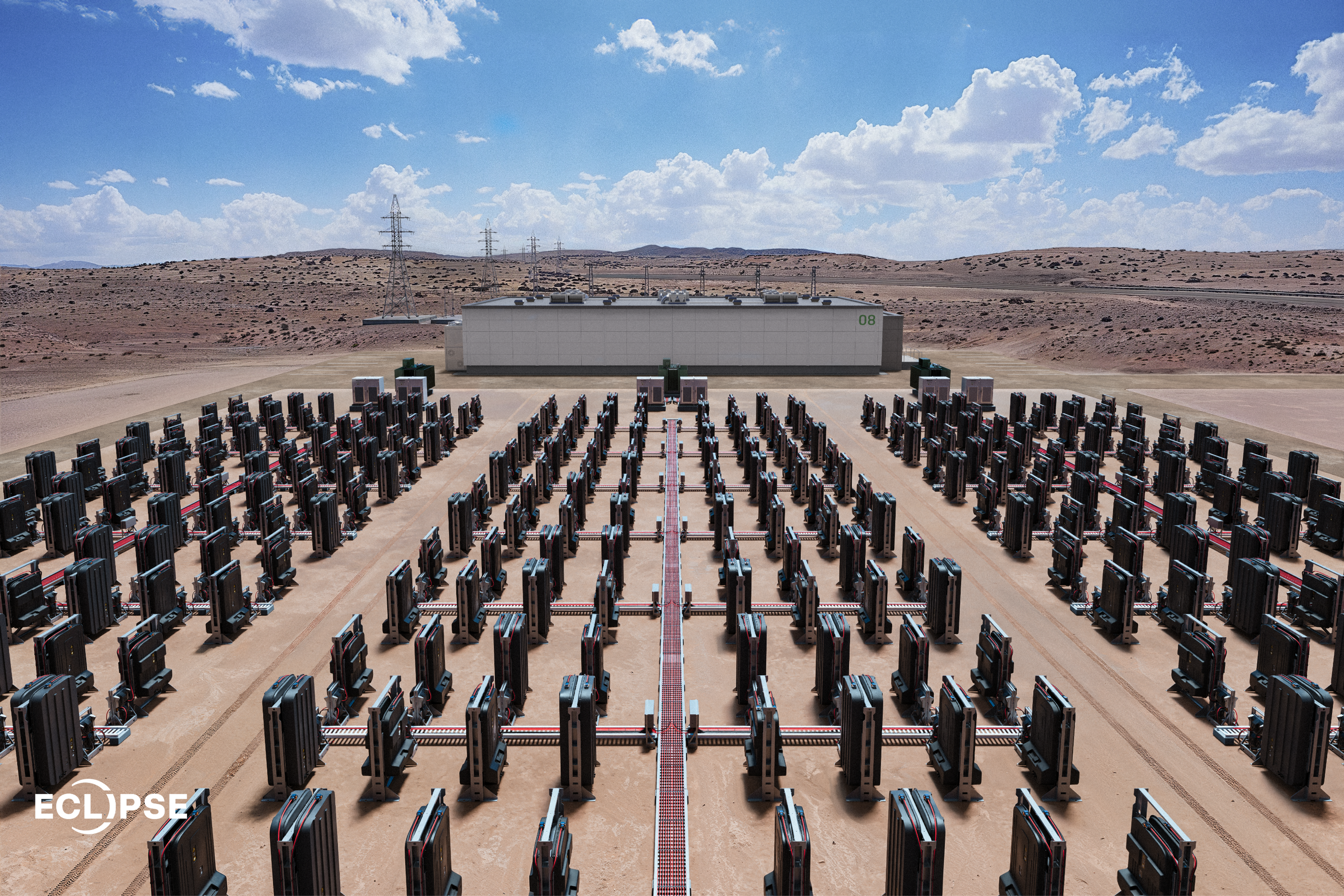
The performance advantage compared to standard GPUs was enough for OpenAI to commit in a major way. On Christmas Eve, Cerebras and OpenAI officially signed a multi-year agreement for OpenAI to deploy 750 megawatts of Cerebras computing capacity.
Ten years earlier, Cerebras was asking the industry to believe that AI would eventually require a fundamentally different compute architecture. Now one of the most important AI companies in the world was betting its future on exactly that proposition. The OpenAI deployment would become one of the defining infrastructure commitments of the reasoning era.
In OpenAI's own announcement, head of compute infrastructure Sachin Katti put it plainly, “Scaling frontier intelligence to a user base larger than the U.S., E.U., and Canada combined demands inference economics and latency GPU clusters can't deliver alone — and Cerebras' wafer-scale architecture closes that gap.”
In May 2026, Cerebras went public , delivering the defining AI-infrastructure IPO of the generative era and the largest semiconductor offering ever brought to market.
Today, Cerebras leads a category that didn't exist 10 years ago when we wrote the memo. The company's customers reflect the breadth of the AI transformation itself, from frontier model developers and cloud providers to pharmaceutical companies, national laboratories, and healthcare institutions. In addition to OpenAI, the company works with AWS, Cognition and AlphaSense. Pharmaceutical leaders such as GSK use Cerebras to accelerate drug discovery, while institutions like Sandia National Laboratories , the Mayo Clinic, and Argonne National Laboratory are applying the technology to challenges ranging from national security and genomic medicine to large-scale scientific research.
The chip we backed now anchors the connected industrial economy we set out to build, which is something Cerebras saw in us from the beginning.
“We chose to work with Pierre and Lior and the Eclipse team because they always shared our vision to build new technologies that have a chance to not just do a little bit better, but a lot,” says Andrew. “We all set out to change industries.”
A chip company is not built by a chip company alone. Nor is any other frontier tech company.
Category-defining businesses are built inside an ecosystem of talent, customers, suppliers, capital, and operational know-how that takes decades to accumulate. This is what Eclipse calls the Eclipse Economy: A connected industrial economy where companies move faster because they move together.
Cerebras sits at the center of that flywheel. The aerospace, defense, manufacturing, energy, and robotics companies Eclipse backs increasingly depend on AI — and increasingly run that AI on compute Cerebras built. Wafer-scale silicon has become load-bearing infrastructure for the rest of the portfolio.
The bet we made in 2016 was never just about a chip. The technology now underwrites the bet we make on every company that needs intelligence to scale.
The architecture Andrew Feldman and his co-founders set out to prove in 2016 — that scaling up would beat scaling out, and that infrastructure would become the defining constraint of the era — is no longer contrarian. The rest of the market is finally building toward it.
Cerebras arrives there with a decade-long head start, and Eclipse has been in the room for every chapter. As Andrew wrote: "They made us better as a company. And made me better as a CEO."
That is what a decade of partnership in service of building something hard looks like. Turning what couldn't be done into what must be done is the work the Eclipse Economy was built to do — and Cerebras is the proof.